

The tired worrier
The classic match: running on empty, yet the mind won't stop chewing things over.


Traditional Chinese herbal formula
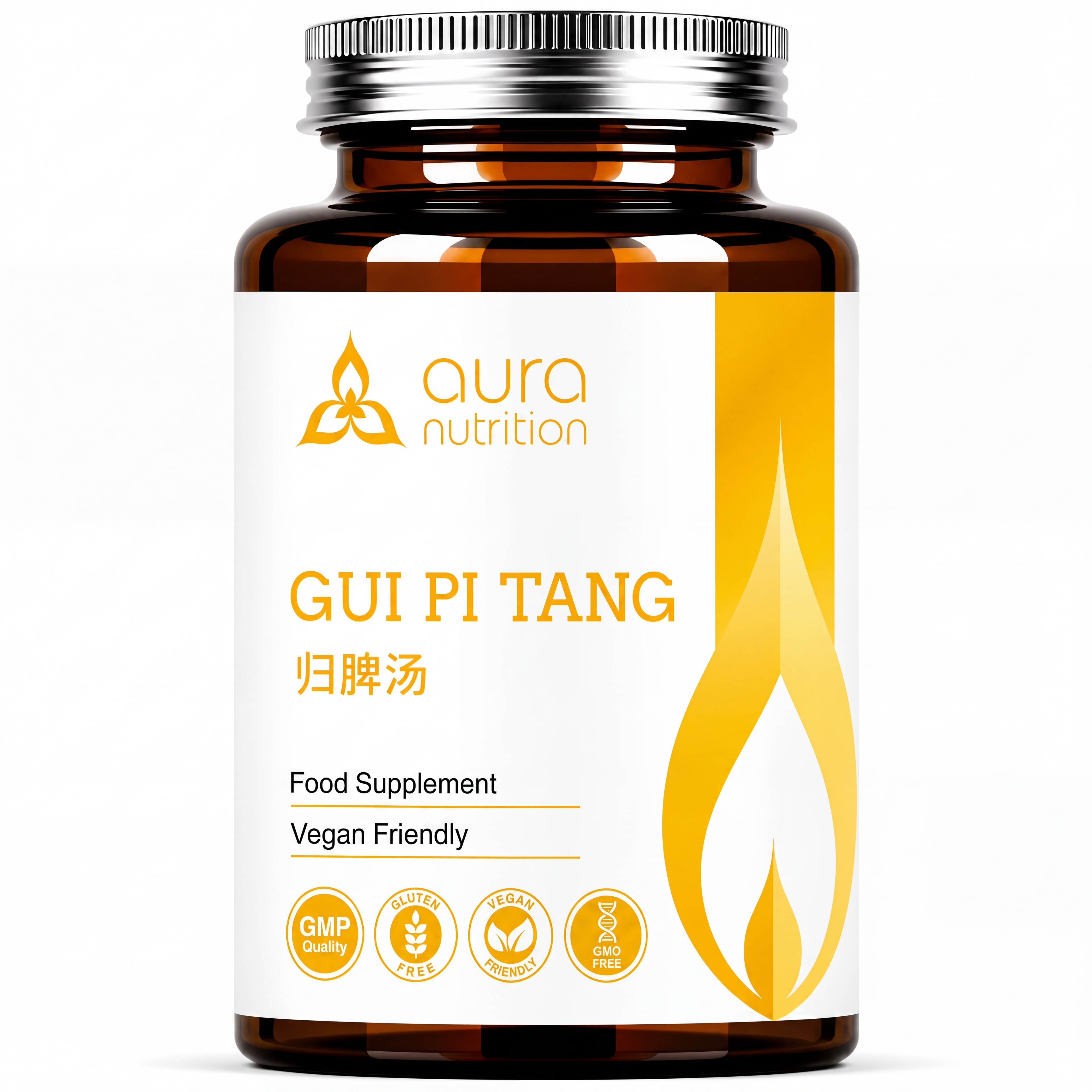
归脾汤 · Restore the Spleen · also known as Gui Pi Wan
Gui Pi Tang was written for the over-thinker. The worrier, the late-night list maker, the person who's running on empty but can't switch off. In Chinese medicine that's a Heart and Spleen picture, and this has been the herbalist's standard choice for it since the 1200s.
Twelve herbs, led by astragalus, longan fruit and ginseng, with dong quai and polygala. Made into 5:1 tablets. Six a day, and a bottle lasts ten days. Explore the formula
Couldn't load pickup availability
Verified Loox reviews
★★★★★
"II found this formula very effective. I feel already a difference between how I felt 2 weeks ago when I have started the treatment and now."
Cristina N. · Video review · Verified buyer★★★★★
"I am in a very early stage of treatment but ai can feel a difference"
Cristina N. · Video review · Verified buyer★★★★★
"I’ve become a regular as it’s exactly what my body needs"
Faisal A. · Video review · Verified buyer★★★★★
"Have been recommended to help me restore my sleep and it has been really useful."
★★★★★
"Your tablets are an effective treatment for my condition."
★★★★★
"exactly as described and fast delivery"
★★★★☆
"I take 3 pills in the morning and 3 in the evening and is have improved my sleep 😴"
★★★★★
"Great product"
Gui Pi Tang first appears in the Ji Sheng Fang, a collection by the Song physician Yan Yonghe, published in 1253. He wrote it for people worn down by too much thinking and worrying, which he said exhausted both the Heart and the Spleen. Seven and a half centuries on, the description still fits rather a lot of us.
Yan's version didn't have dong quai or polygala. Those came about three hundred years later, when the Ming doctor Xue Ji added them in his annotated edition of a famous book on women's health. His version stuck, and it's the one most herbalists use today.
The name means 'return to the Spleen'. The idea being that if you look after the Spleen, the body makes enough Blood to settle the Heart. Our blend uses fleeceflower vine (Ye Jiao Teng) alongside poria, a herb traditionally used to calm the Spirit, in place of the sour jujube seed of the classical recipe.
In Chinese medicine
Here's the idea. Chinese medicine says the Spleen makes Blood out of the food you eat, while the Heart is home to the Spirit, the Shen, and it needs plenty of Blood for the Shen to rest. Worry hits the Spleen first, so the theory goes, less Blood gets made, and before long the Heart's running short too.
So you end up with two things at once. The Spleen side: tiredness, a poor appetite, a pale face. The Heart side: a busy mind, a fluttery feeling, waking in the small hours. Herbalists call this Heart and Spleen deficiency, and Gui Pi Tang is the textbook answer to it.
Astragalus, ginseng and white atractylodes do the building up. For Blood you've got longan fruit (small, sticky and a bit like a dried lychee) alongside dong quai, and then polygala, poria and fleeceflower vine are the ones meant to settle the Spirit. A pinch of aucklandia keeps all that rich tonic stuff from sitting heavy. Rather thoughtful, when you lay it out like that.
The Five Elements
The Spleen sits under Earth, the steady centre of the Five Elements. In the Five Elements, Fire (the Heart) is Earth's mother, so the two are close. When the child is weak, the old saying goes, it drains the mother.
Late summer
Earth's time of year, when the harvest ripens and everything slows down a touch.
Spleen
Paired with the Stomach, and said to make the Blood the Heart depends on.
Yellow
Yellow, the colour of ripe grain and ochre soil. Funnily enough, slice an astragalus root and it's pale yellow inside as well.
Sweet
Sweet. You can actually taste it in this one, thanks to the longan, jujube and astragalus, though it's a soft, earthy sweetness, nothing like sugar.
Pensiveness
Overthinking. Going round in circles. Exactly the habit Yan Yonghe wrote this formula for.
Traditional use
Here's how it's been used down the centuries. We're talking traditional practice, not health claims.
The classic match: running on empty, yet the mind won't stop chewing things over.
Herbalists chose it when Heart Blood ran low and the Shen couldn't settle at night.
A long-standing pick for Spleen and Blood deficiency: little appetite, little colour.
Used when a weak Spleen was thought to leave the cycle long, light or tiring.
This section describes traditional use in Chinese herbal practice. Gui Pi Tang is a food supplement and is not intended to diagnose, treat, cure or prevent any disease.
Inside the formula · Ingredients
Chinese formulas are arranged like a royal court, with chief herbs in charge and others supporting them. Amounts are per daily serving of 6 tablets.
Chief
Astragalus is the one building up Spleen Qi. Longan fruit sits alongside it, nourishing the Blood, and it's also said to calm the Heart. Herb Glossary
Ministers
Ginseng and white atractylodes back up the Spleen. Dong quai adds more Blood nourishment. Herb Glossary
Assistants
Poria, polygala and fleeceflower vine settle the Spirit. Aucklandia moves Qi so the tonics don't clog things up. Herb Glossary
Envoys
Liquorice, ginger and jujube harmonise the formula and are kind to the Stomach. Herb Glossary
Inactive ingredients: Cassava starch, Hypromellose, Magnesium stearate, Polyethylene glycol, Talc.
These are used in very small amounts to form and coat the tablets. They don't add to the formula itself.
How to take
Tablets with water.
Tablets with water.
Most people take a formula for several weeks.
Always follow the label. If you take any medication, are pregnant or breastfeeding, please speak to your GP or pharmacist before use.
Choosing between them
| Compare | Gui Pi Tang | Tian Wang Bu Xin Dan |
|---|---|---|
| First recorded | Song dynasty, 1253 | Ming dynasty |
| The idea | Build up the Spleen to nourish Heart Blood | Nourish Heart and Kidney Yin and calm the Spirit |
| Herbs | 12, including astragalus and longan fruit | 13, including rehmannia, asparagus root and ophiopogon |
| Character | Warm and nourishing | Cool and moistening |
| Often chosen when | A busy mind comes with tiredness and a poor appetite | A busy mind comes with dryness and a feeling of heat at night |
In Chinese medicine terms, Heart and Spleen deficiency. In everyday terms, being tired and drained while your mind keeps whirring. It's sold as a food supplement and isn't intended for any medical condition.
Both are about a Heart that can't settle. Herbalists lean towards Gui Pi Tang when tiredness and a poor appetite are part of it, and Tian Wang Bu Xin Dan when there's more dryness and heat. Not sure? Ask us.
Take three in the morning and three in the evening, and a bottle of 60 lasts you ten days. If you'd rather have more of it in the evening, that's fine too, honestly, as long as you stick to six a day in total.
If you're pregnant, breastfeeding or on regular medication, check in with your GP first, please. Dong quai and ginseng aren't ones to take with blood thinners like warfarin. Fleeceflower vine comes from the same plant as he shou wu, which the UK MHRA has warned can rarely affect the liver, so if you've had any liver trouble, have a word with your GP before you start.
The classical recipe includes it. Our recipe uses fleeceflower vine and poria in that spot instead, two herbs with the same traditional job of calming the Spirit. Every herb on our label is listed above with its amount.
Roughly 'return to the Spleen'. The thinking is that the Spleen is where it all starts, so putting it right comes first.
Related formulas
Verified Loox reviews
Food supplements should not be used as a substitute for a varied, balanced diet and a healthy lifestyle. Not intended to diagnose, treat, cure or prevent any disease. Keep out of reach of children.


