

Stuck halfway
The original use: a Shaoyang pattern, where you're neither properly well nor properly unwell.


Traditional Chinese herbal formula
小柴胡汤 · Minor Bupleurum · also known as Sho-saiko-to
Possibly the most famous formula in the whole Shang Han Lun. Xiao Chai Hu Tang was written for being stuck halfway, neither properly well nor properly ill. Hot one minute, chilly the next, off your food, a bitter taste in the mouth and a bit of a short fuse. Herbalists still call it the great 'harmonising' formula.
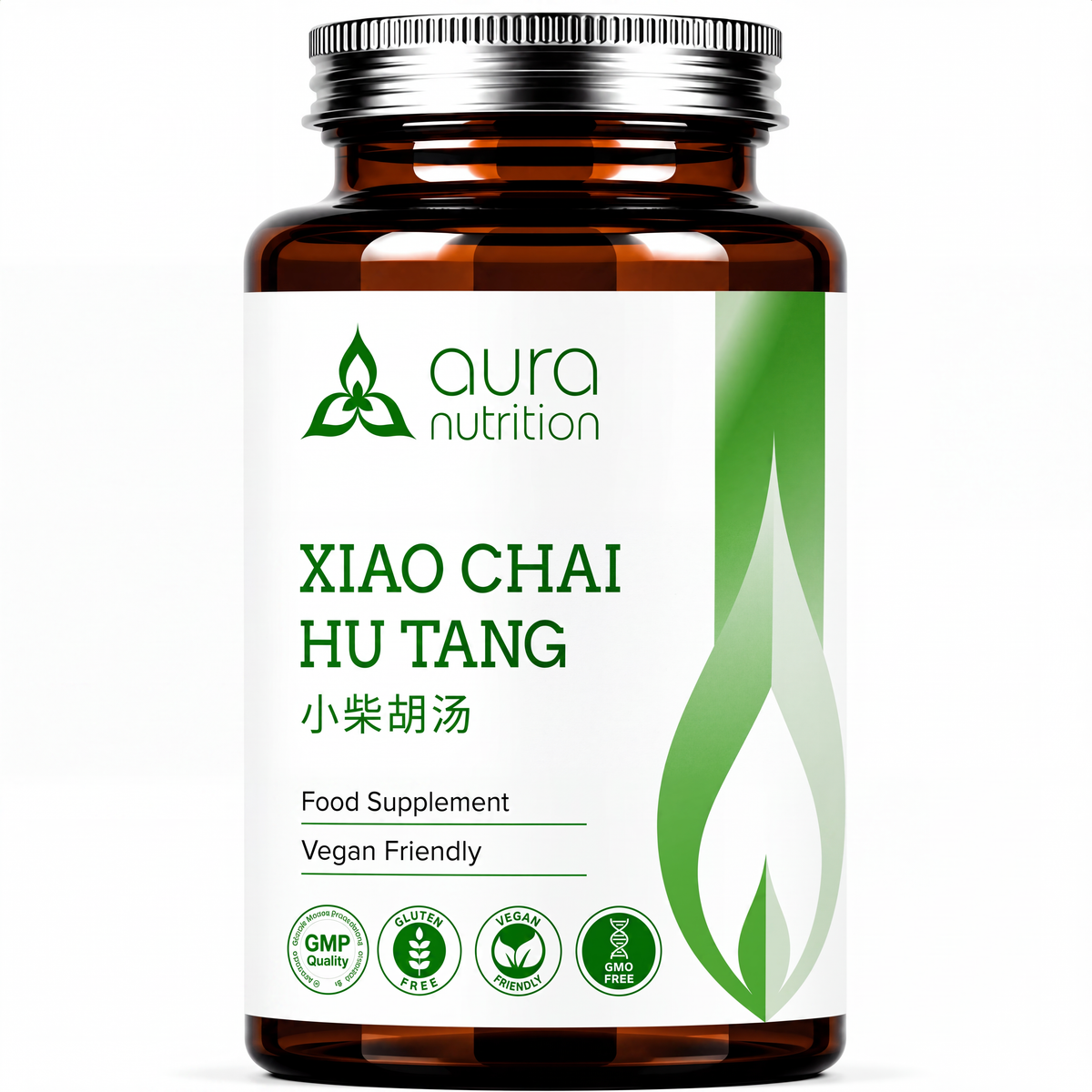
Seven herbs, led by bupleurum with Baikal skullcap, ginseng and pinellia. Made into 5:1 tablets. Four a day, so a bottle lasts fifteen days. Explore the formula
Couldn't load pickup availability
Verified Loox reviews
★★★★★
"Amazing product, I had been so ill for 8 weeks, constantly nauseous, couldn’t stomach food & had zero energy, within 2 days of taking these tablets I was full of energy & my appetite returned. I highly recommend."
★★★★☆
"Very easy order and overnight delivery. Very carefully packaged. Well presented and prepared product. Now beginning to take effect... Excellent to have such a wide range of Chinese medicines easily available."
★★★★★
"Good product. I've been taking them for nine months with desired effect. Good service, fast delivery."
★★★★★
"Very good results so far, I’m treating my kidneys for the moment and shall be ordering more!"
★★★★★
"Delighted, continues to work well for me."
★★★★★
"These tablets work well for me"
★★★★★
"Fast delivery, works for me"
★★★★★
"It works very well!!"
Xiao Chai Hu Tang comes from the Shang Han Lun, the Treatise on Cold Damage Disorders, by Zhang Zhongjing around 200 AD. Zhang lived through terrible epidemics at the end of the Han dynasty (he wrote that two-thirds of his own large clan died within ten years) and set out to map how illness moves through the body, stage by stage.
One of those stages is Shaoyang, the 'lesser Yang', a sort of hinge between the outside of the body and the inside. Xiao Chai Hu Tang is the formula for it. Zhang mentions it in more passages than almost anything else, and it became the model for a whole family of bupleurum formulas.
'Xiao' means minor or small, to set it apart from Da Chai Hu Tang, the major version. In Japan it's Sho-saiko-to and was one of the country's most prescribed Kampo formulas by the late 20th century.
In Chinese medicine
Zhang pictured illness moving inwards in stages. At first it's on the surface: shivery, achy. Push further in and it's deep inside. Shaoyang sits between the two, 'half outside, half inside'. The body's defences and the problem are evenly matched, so neither wins.
The Shang Han Lun describes the picture vividly. Hot and cold by turns. A bitter taste and dry throat. Fullness under the ribs. No appetite, a queasy stomach, a bit of dizziness and irritability. Not hard to imagine, is it? That stalemate is what Xiao Chai Hu Tang is for.
Bupleurum lifts and pushes outwards while Baikal skullcap clears heat on the inside, and between them they swing the hinge open. Pinellia and ginger are in there to calm a queasy stomach. Ginseng, jujube and liquorice, meanwhile, back up the body's own Qi so it's got the strength to finish things off. Clearing and supporting at the same time, which is the whole point.
The Five Elements
Shaoyang belongs to the Gallbladder, which is the Liver's partner under Wood. Wood is all about smooth movement and good timing. Caught at the hinge, it can't do either.
Spring
Wood's season, the in-between time when winter turns to summer. Fitting, for a hinge formula.
Gallbladder
Shaoyang's organ, paired with the Liver. Said to govern decisions, among other things.
Green
Wood's colour. Fresh bupleurum leaves are a bright grassy green.
Sour
Wood's taste, though the Shaoyang picture is famous for a bitter taste in the mouth.
Anger
Irritability, mostly. The short fuse that comes with feeling neither one thing nor the other.
Traditional use
Here's how it's been used, from the Shang Han Lun to modern Kampo. Traditional use, to be clear. We're not making medical claims.
The original use: a Shaoyang pattern, where you're neither properly well nor properly unwell.
The Shang Han Lun's signature sign, described in Chinese medicine terms.
Used when a bitter mouth, a queasy stomach and fullness under the ribs came together.
Later herbalists widened its use to tension that seemed to unsettle the digestion.
This section describes traditional use in Chinese herbal practice. Xiao Chai Hu Tang is a food supplement and is not intended to diagnose, treat, cure or prevent any disease.
Inside the formula · Ingredients
Chinese formulas are built like a royal court, with a chief, a minister and a team of assistants. Amounts are per daily serving of 4 tablets.
Chief
Bupleurum's the chief, a feathery-leaved plant whose root is said to release the Shaoyang outwards and get stuck Qi on the move. Herb Glossary
Minister
Then there's Baikal skullcap, a bright yellow root, very bitter, that clears heat from the inside, a nice counterweight to bupleurum pushing out. Herb Glossary
Assistants
Pinellia and ginger are the stomach-settlers. Ginseng and jujube (a sweet, dried red date) back up Qi so the body can hold its own. Herb Glossary
Envoy
Honey-fried liquorice harmonises everything, which is rather the point of this formula. Herb Glossary
Inactive ingredients: Cassava starch, Hypromellose, Magnesium stearate, Polyethylene glycol, Talc.
These are used in very small amounts to form and coat the tablets. They don't add to the formula itself.
How to take
Tablets with water.
Tablets with water.
Most people take a formula for several weeks.
Always follow the label. If you take any medication, are pregnant or breastfeeding, please speak to your GP or pharmacist before use.
Choosing between them
| Compare | Xiao Chai Hu Tang | Chai Hu Shu Gan San |
|---|---|---|
| First recorded | Han dynasty, around 200 AD | Ming dynasty |
| The idea | Harmonise the Shaoyang hinge | Get stuck Liver Qi moving |
| Herbs | 7, including Baikal skullcap and ginseng | 7, including cyperus and tangerine peel |
| Character | Balanced, clears and supports | Strongly moving |
| Often chosen when | Hot and cold by turns, with a bitter mouth and no appetite | Tension and tightness under the ribs are the main thing |
The Shaoyang pattern, in Chinese medicine terms: being caught halfway, hot and cold by turns, with a bitter taste and no appetite. Later herbalists also used it when tension upset the digestion. It's a food supplement and isn't intended for any medical condition.
Ah, that's because Zhang Zhongjing also wrote a bigger, stronger one, Da Chai Hu Tang (Major Bupleurum), with rhubarb and a few other herbs thrown in. Xiao just means small, so this is the gentler of the two.
It's two in the morning and two in the evening, which makes four a day, so you'll get fifteen days out of a bottle of 60.
Yes, a couple, so bear with us. In Japan there were rare but serious lung reactions reported with Sho-saiko-to, mostly in people who were also having interferon injections, so please never take it alongside interferon. Baikal skullcap's been linked to rare liver reactions as well. Got a liver or lung condition, take regular medication, or you're pregnant or breastfeeding? Check with your GP first. And if you get a dry cough, feel breathless or notice your skin going yellow, stop and get advice.
Pretty much, yes. It's the same formula from the same source, with the same seven herbs, though Japanese makers have their own methods, so the finished products aren't quite identical.
Both have bupleurum. Xiao Yao San nourishes Blood and looks after the Spleen, for a wound-up, tired feeling. Xiao Chai Hu Tang is about the Shaoyang hinge, with more of a hot-and-cold, bitter-mouthed picture. Different jobs.
Related formulas
Verified Loox reviews
Food supplements should not be used as a substitute for a varied, balanced diet and a healthy lifestyle. Not intended to diagnose, treat, cure or prevent any disease. Keep out of reach of children.


