

Qi and Blood together
Its classic use: thoroughly run down in both, with that cold, chilled-to-the-bone feeling.


Traditional Chinese herbal formula
十全大补汤 · Ten Great Tonics · also known as Shi Quan Da Bu Wan
The big one. Shi Quan Da Bu Tang combines the two most famous building formulas in Chinese herbalism, one for Qi and one for Blood, then adds astragalus and cinnamon bark to warm the lot. Herbalists have used it for nine centuries for people who are thoroughly worn out, cold and depleted.
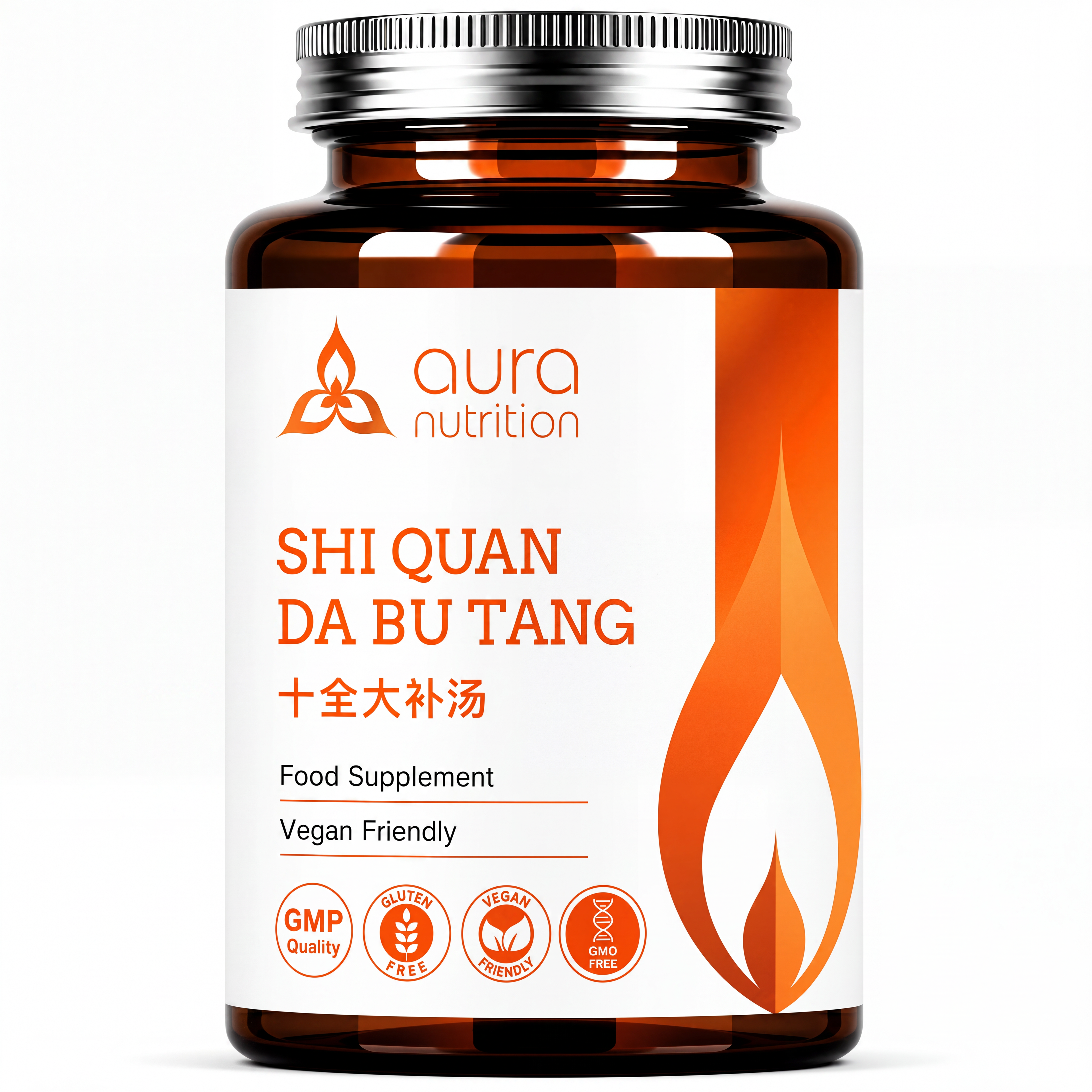
Twelve herbs, including ginseng, astragalus, dong quai and rehmannia. Made into 5:1 tablets. Six a day, and a bottle lasts ten days. Explore the formula
Couldn't load pickup availability
Verified Loox reviews
★★★★★
"This product helps me stay healthy, supports my immune system, and gives me more energy."
★★★★★
"It is very effective support to the body; helps overcoming health issues"
★★★★★
"It makes me full of energy and helps a lot in regeneration."
Shi Quan Da Bu Tang first appeared around 1110 in the He Ji Ju Fang, the Song government's official formulary. 'Shi quan' means 'ten complete', or 'all-round', and 'da bu' is 'great tonic', so it's hardly a name that undersells itself, is it?
The thinking's easy enough to follow, honestly it's more like a recipe than a theory. Start with the Four Gentlemen, the go-to for Qi (that's ginseng, white atractylodes, poria and liquorice). Tip in the Four Substances, which are the go-to for Blood: rehmannia, dong quai, white peony, Szechuan lovage. Count them up and you've got eight, then astragalus comes in for a bit more Qi and cinnamon bark for warmth, and there's your ten. Ginger and jujube were simmered in alongside, which is why our label says twelve.
It became a mainstay of Chinese tonic medicine and travelled well, too. Japan knows it as Juzentaihoto, one of the most widely used Kampo formulas there is, and in Chinese kitchens you'll still find versions of it bobbing about in slow-cooked chicken soup.
In Chinese medicine
In Chinese medicine you rarely hear about Qi without Blood turning up in the same sentence. Roughly, Qi's what gets things going and Blood's what feeds and nourishes, but they lean on each other like two tired people on a late train, and when one slumps the other usually goes too. Put both low together and you've got what herbalists call Qi and Blood deficiency.
Picture someone running on fumes. They're pale and puffed out by the second flight of stairs, they talk quietly, their hands are cold and food doesn't interest them much. It's the sort of state people describe after a long illness, a big operation or just a properly rotten year. If on top of all that they feel chilled right through, herbalists add 'cold' to the description, and that's where this formula comes in.
Between them, the Four Gentlemen work on Qi through the Spleen while the Four Substances get on with nourishing the Blood. Astragalus gives the Qi side an extra lift. Then there's cinnamon bark (yes, proper cinnamon, the stuff that makes the whole storeroom smell like Christmas), which warms everything up so all that tonic has something to work with. And with this many rich herbs in one go, ginger and jujube are there to keep the stomach on side.
The Five Elements
The Spleen's an Earth organ, and Chinese medicine sees it as the source of both Qi and Blood. So if you're rebuilding both, it makes sense to start by looking after Earth.
Late summer
Earth's harvest season. Just right for a formula that's all about restocking the stores.
Spleen
Turns food into Qi and Blood, they say, and half this formula's aimed right at it.
Yellow
Earth's colour. Slice an astragalus root and it's pale yellow inside, which seems right.
Sweet
Earth's taste, and the taste of tonics too. Ginseng, astragalus, jujube and liquorice are sweet, every one.
Worry
Overthinking's said to drain the Spleen. Worn out from worrying? The old books had a view on that.
Traditional use
Here's how Shi Quan Da Bu Tang has traditionally been used. It's history and tradition we're sharing, not medical claims.
Its classic use: thoroughly run down in both, with that cold, chilled-to-the-bone feeling.
Taken in the long, slow weeks after a time that's really taken it out of you.
People in China have long leaned on it once the cold sets in, and plenty of families still drop it into a pot of soup for the winter.
Our grans would've fitted the bill, chilly in July and flagging by four in the afternoon. That's the older person herbalists have long had in mind for it.
This section describes traditional use in Chinese herbal practice. Shi Quan Da Bu Tang is a food supplement and is not intended to diagnose, treat, cure or prevent any disease.
Inside the formula · Ingredients
Four herbs for Qi, four for Blood, two to warm and strengthen, and two to help the stomach along. Amounts are per daily serving of 6 tablets.
Chiefs
Ginseng leads the Qi half and rehmannia leads the Blood half. One each. Herb Glossary
Ministers
Astragalus piles on more Qi, while dong quai and white peony nourish the Blood. White atractylodes and poria? They strengthen the Spleen. Herb Glossary
Assistants
Szechuan lovage stops all that rich Blood-building getting stodgy by keeping things moving, and the cinnamon bark's there for warmth, right through the formula. Herb Glossary
Envoys
Last come ginger, jujube and liquorice, who are basically the kitchen staff, keeping the stomach happy and the rest of the herbs getting along. Herb Glossary
Inactive ingredients: Cassava starch, Hypromellose, Magnesium stearate, Polyethylene glycol, Talc.
These are used in very small amounts to form and coat the tablets. They don't add to the formula itself.
How to take
Tablets with water.
Tablets with water.
Most people take a formula for several weeks.
Always follow the label. If you take any medication, are pregnant or breastfeeding, please speak to your GP or pharmacist before use.
Choosing between them
| Compare | Shi Quan Da Bu Tang | Ba Zhen Tang |
|---|---|---|
| First recorded | Song dynasty, around 1110 | Yuan dynasty, 1300s |
| The idea | Build Qi and Blood and warm the body | Build Qi and Blood |
| Herbs | 12, including astragalus and cinnamon bark | 8: the Four Gentlemen and the Four Substances |
| Character | Warming and strongly building | Balanced, neither warm nor cool |
| Often chosen when | Depletion comes with feeling cold | Depletion without much sign of cold |
For what Chinese medicine calls Qi and Blood deficiency with a lean towards cold, so pale, tired, chilly and depleted. It's a food supplement, though, so not a medicine.
Ba Zhen Tang is the eight herbs at the core. Shi Quan Da Bu Tang adds astragalus and cinnamon bark on top, making it stronger and warmer, and herbalists pick it when depletion comes with feeling cold.
Ten's the count of the main herbs. The original instructions also said to cook it with fresh ginger and jujube dates, so we've popped those in too.
Six a day, split three in the morning and three at night. That's ten days to a bottle.
If you're pregnant, breastfeeding or taking any medicines, we'd ask you to check with your GP before starting. The main ones to know about are dong quai and ginseng, which can interact with blood thinners such as warfarin, and ginseng can also interact with some blood sugar medicines. Herbalists traditionally put tonics like this on hold during a cold or fever, and they wouldn't choose it for anyone who runs hot.
Tonics are traditionally slow and steady, so people often stick with them for a few months. Some just take it through the winter.
Related formulas
Verified Loox reviews
Food supplements should not be used as a substitute for a varied, balanced diet and a healthy lifestyle. Not intended to diagnose, treat, cure or prevent any disease. Keep out of reach of children.


