

Liver fire
The classic picture of heat flaring upwards: flushed face, red eyes, a temper on a hair trigger.


Traditional Chinese herbal formula
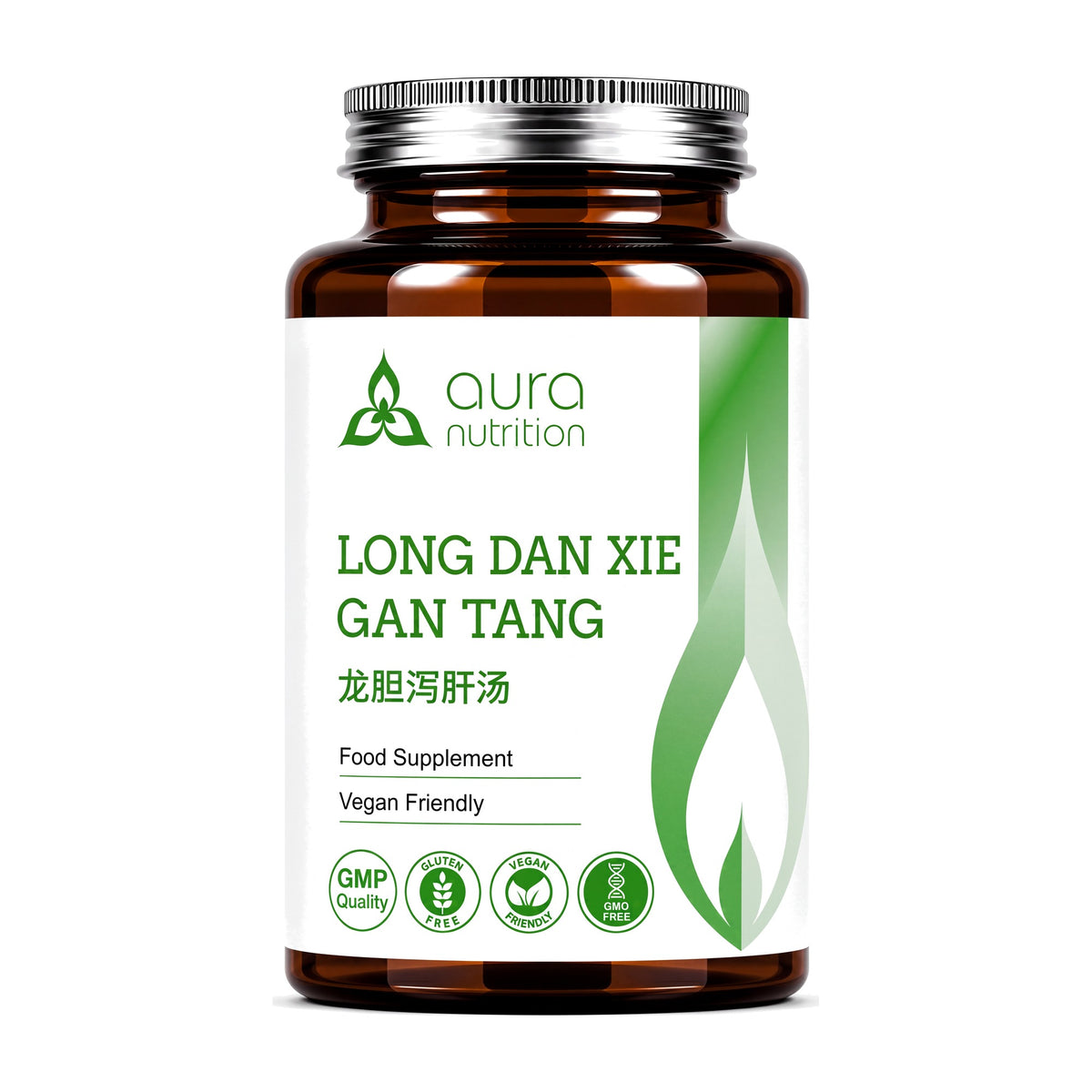
龙胆泻肝汤 · Gentian · also known as Long Dan Xie Gan Wan
Long Dan Xie Gan Tang means 'gentian decoction to drain the Liver', and it's one of the coolest formulas in the Chinese repertoire. Herbalists reached for it when heat and damp seemed to be building up along the Liver channel. Think hot, bothered and irritable, and then some.
Ten herbs, led by gentian root with scutellaria and gardenia. Made into 5:1 tablets. Six a day, so a bottle lasts ten days. Fair warning: gentian is famously bitter. Explore the formula
Couldn't load pickup availability
Verified Loox reviews
★★★★★
"Great!"
Hristina T. · Video review · Verified buyer★★★★★
"I was having issues with migraines and anger. And a beautiful TICM doctor suggested me this. Since taking the tablets along side my hydrogen, Alkaline water I have so much energy and my head feels amazing. It has definitely…"
★★★★★
"Quick and easy ordering process! Taste fine and does the job perfectly would recommend!"
★★★★★
"I got these to help reduce heat and to help with psoriasis."
★★★★★
"Item arrived quickly, everything as expected."
★★★★★
"Quick delivery and works very well!"
★★★★★
"Amazing stuff,had help me so much"
★★★★★
"Thanks, great experience"
Versions of this formula go back to the Jin and Yuan dynasties, when Li Dongyuan and others were experimenting with gentian-based recipes. The one most herbalists learn today was set down by Wang Ang in the Yi Fang Ji Jie, 'Collected Explanations of Formulas', in 1682. That book became a standard study guide for centuries.
Gentian itself is an old favourite. Its Chinese name, long dan, means 'dragon's gall', on account of the taste. Anyone who's tried it will tell you that's not an exaggeration.
There's an important modern chapter too. The classic recipe includes mu tong, and in the 1990s it came out that some suppliers abroad had used a species of mu tong containing aristolochic acid, which is harmful to the kidneys. Aristolochia is banned in the UK. Our version contains no mu tong at all, and uses zhu ling and poria to do its draining job instead.
In Chinese medicine
Chinese medicine reckons the Liver can overheat. If it does, the heat's said to flare up (red eyes, a throbbing head, a hot temper), or else it teams up with damp and sinks down the Liver channel into the lower body. The textbooks call these Liver fire and Liver channel damp-heat.
It's a full, excess sort of picture. Not someone run down and pale, more someone flushed and bitter-mouthed who's very ready for an argument, and that's why the formula's so cold. Draining is the whole point here. Nourishing isn't.
Gentian (one of the bitterest roots going), scutellaria and gardenia are the heat-clearers. Water plantain, zhu ling and poria then drain the damp, out through the urine. Bupleurum points everything at the Liver. Rehmannia and dong quai protect the Blood, because draining that hard could otherwise dry you out, and liquorice keeps the peace.
The Five Elements
The Liver and Gallbladder belong to Wood. Wood grows upwards, and when there's too much heat in it, the old texts say it flares like a fire catching in dry branches. This formula is the bucket of water.
Spring
Wood's season. Herbalists say Liver heat tends to rise along with the year.
Liver
Paired with the Gallbladder. Gentian is especially linked with both.
Green
Wood's colour, and some say the colour of the face when the Liver is struggling.
Sour
Wood's taste, though honestly this formula is all bitter. Bitter drains heat, and gentian is about as bitter as herbs get.
Anger
The emotion of Wood, and very much part of the hot, flared-up picture this formula was built for.
Traditional use
Here's how Long Dan Xie Gan Tang has been used traditionally. Please read it as history and tradition, not as medical claims.
The classic picture of heat flaring upwards: flushed face, red eyes, a temper on a hair trigger.
Herbalists chose it when heat and damp were said to sink down the Liver channel into the lower body.
For people who run strongly hot rather than tired, with a bitter taste in the mouth.
Traditionally used for a short spell to clear things out, then swapped for something gentler.
This section describes traditional use in Chinese herbal practice. Long Dan Xie Gan Tang is a food supplement and is not intended to diagnose, treat, cure or prevent any disease.
Inside the formula · Ingredients
The court is led by gentian, but it's a team effort. Amounts are per daily serving of 6 tablets.
Chief
Gentian root, the 'dragon's gall', clears heat and damp from the Liver and Gallbladder. Herb Glossary
Ministers
Scutellaria and gardenia back gentian up, clearing heat from the upper and lower body. Herb Glossary
Assistants
Water plantain, zhu ling and poria drain damp. Rehmannia and dong quai protect the Blood and Yin. Bupleurum guides the formula to the Liver. Herb Glossary
Envoy
Liquorice protects the Stomach from all those cold, bitter herbs. Herb Glossary
Inactive ingredients: Cassava starch, Hypromellose, Magnesium stearate, Polyethylene glycol, Talc.
These are used in very small amounts to form and coat the tablets. They don't add to the formula itself.
How to take
Tablets with water.
Tablets with water.
Most people take a formula for several weeks.
Always follow the label. If you take any medication, are pregnant or breastfeeding, please speak to your GP or pharmacist before use.
Choosing between them
| Compare | Long Dan Xie Gan Tang | Jia Wei Xiao Yao San |
|---|---|---|
| First recorded | Qing dynasty, 1682 | Ming dynasty, 1500s |
| The idea | Drain heat and damp from the Liver, firmly | Free stuck Qi and cool a little heat |
| Herbs | 10, including gentian and scutellaria | 8, including bupleurum and gardenia |
| Character | Very cold and draining | Gently cooling and nourishing |
| Often chosen when | Someone runs strongly hot and full | Tension comes with mild warmth and tiredness |
No. Our version has no mu tong of any kind, so there's no risk of aristolochia. Aristolochia is banned in the UK, and we wouldn't touch it anyway.
Gentian. Its Chinese name means 'dragon's gall'. In Chinese medicine, bitter is the taste that drains heat, so that bitterness is rather the point. Tablets help a lot.
Three tablets in the morning and three in the evening. A bottle lasts ten days.
Traditionally, no. It's very cold, so herbalists use it for a short spell and then move you on to something milder. Feeling chilly, loose in the tummy or off your food? That's the old sign it isn't right for you.
No. Give it a miss if you're pregnant or breastfeeding, if you're someone who feels the cold, or if your digestion's on the weak side. The liquorice can push blood pressure up, and you shouldn't mix dong quai with blood thinners such as warfarin. On any medication? Please check with your GP or pharmacist first.
Yes, it's the same recipe. 'Tang' means it's made as a decoction and 'wan' means pills, and ours happen to be concentrated tablets.
Related formulas
Verified Loox reviews
Food supplements should not be used as a substitute for a varied, balanced diet and a healthy lifestyle. Not intended to diagnose, treat, cure or prevent any disease. Keep out of reach of children.


