

Low on energy
The textbook pick for Spleen Qi deficiency, you know the one: tired, a bit pale, can't really be bothered with anything.


Traditional Chinese herbal formula
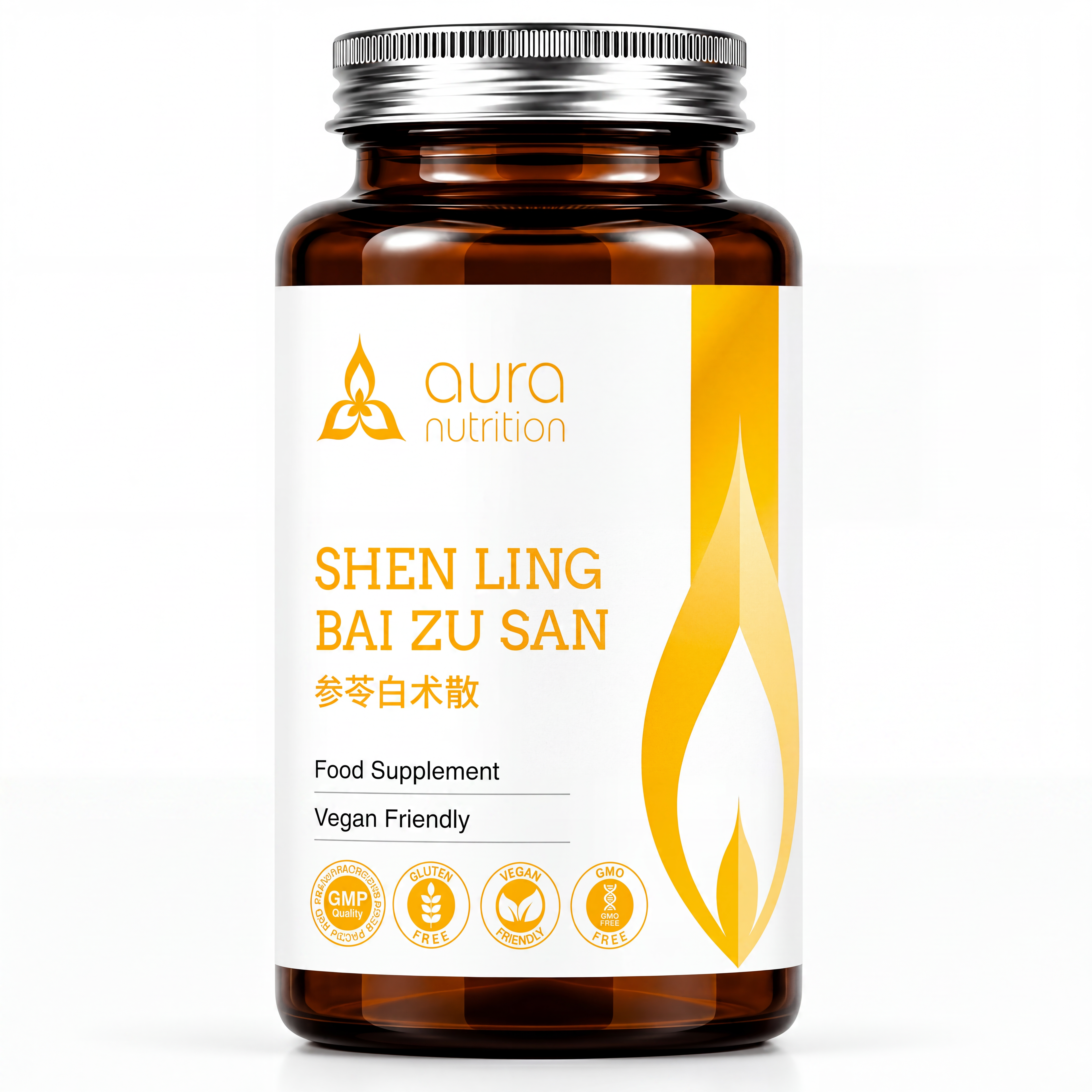
参苓白术散 · Ginseng, Poria & Atractylodes · also known as Shen Ling Bai Zhu Wan
A gentle, food-like formula for the Spleen, which in Chinese medicine means digestion and everyday energy. Herbalists reached for Shen Ling Bai Zhu San when someone felt tired, a bit soggy in the middle and off their food, the sort of person who never quite gets going after lunch.
Nine herbs, led by ginseng, poria and white atractylodes, with Job's tears, Chinese yam and lotus seed. Made into 5:1 tablets. Six a day, so a bottle lasts ten days. Explore the formula
Couldn't load pickup availability
Verified Loox reviews
★★★★★
"I have been using these for a few months now and can confidently say they have a great effect."
Hristina T. · Video review · Verified buyer★★★★★
"This is my 2nd bottle... I'm still on the first bottle, but was running out, so made sure to get some more before I did. After realising I had spleen qi deficiency, and damp/phlegm in body because if it, plus digestive issues,…"
★★★★★
"Wonderful"
★★★★☆
"Used this to help with eczema itch"
★★★★☆
"Recommend to anyone."
Shen Ling Bai Zhu San comes from the Tai Ping Hui Min He Ji Ju Fang, the Song government's official book of recipes, put together around 1110. Pharmacies all over the empire had to make it the same way. It's one of the formulas that book is still remembered for.
The name's really just a roll call of the first three herbs. Ginseng is Ren Shen, so that's your Shen, poria (Fu Ling) gives you Ling, and white atractylodes is Bai Zhu. Add liquorice and you've got the Four Gentlemen, about as basic as Spleen formulas get, and this one takes that little core and builds on it.
What's added is interesting. Chinese yam, lotus seed and Job's tears are all things people actually cook with in China, in congee and soups. So the formula has a homely, almost edible feel. Platycodon and amomum fruit finish it off.
In Chinese medicine
Start with the Spleen. Odd choice of organ to Western ears, we know, but in Chinese medicine it's the one that turns your shepherd's pie into Qi, the stuff you run on till bedtime. If it's flagging (Spleen Qi deficiency, if you want the jargon) your food apparently doesn't get put to proper use. And you'd feel that: legs like lead by mid-afternoon, a so-so appetite, a tummy that grumbles on and off.
There's a second half to it, too. A tired Spleen isn't much good at shifting fluids, so Damp collects, and that's where the soggy, sluggish side comes from: that heavy, sit-down-after-lunch feeling, loose stools, a pale and slightly puffy look. Herbalists call the whole picture Spleen deficiency with Damp, and if you ask one which formula they'd reach for, it's usually this.
Ginseng, white atractylodes and poria do the strengthening, while Job's tears (plump, pearly grains, a bit like barley) and poria again help drain the Damp. Yam and lotus seed are said to steady things, and amomum, with its warm, cardamom-ish smell, is there to wake up a dull appetite. Platycodon? Its job is to lift the whole formula upwards. Old-school logic, sure, but it hangs together.
The Five Elements
The Spleen and Stomach sit under Earth, which the old system puts right at the centre of everything. We like to think of Earth as the larder and the floorboards at once. It feeds you, it holds you up, and once it's low, honestly, everything else starts wobbling with it.
Late summer
Late summer. Think of those sticky August weeks when your washing won't dry on the line, which, so the theory goes, is just the weather to wear a Spleen out.
Spleen
The Spleen works hand in hand with the Stomach, and between them they turn food into energy. Which is pretty much this formula's entire reason for being.
Yellow
Yellow, like ploughed soil or a bowl of millet. Rather fitting, really, for a formula that's half seeds and yam.
Sweet
Sweet, but the mild kind you get from ginseng, yam and liquorice. Think cooked rice rather than a biscuit.
Worry
Overthinking, apparently, is what wears the Spleen down. Chewing things over, in more ways than one.
Traditional use
This is how herbalists have used it over the centuries. We're describing tradition here, so please don't read it as a medical claim.
The textbook pick for Spleen Qi deficiency, you know the one: tired, a bit pale, can't really be bothered with anything.
When a meal seems to just sit there and leave you sluggish instead of fuelled, this is the one herbalists tended to think of.
Chosen when the weakness came with Damp as well, so a heavy, puffy sort of feeling and an appetite that's gone a bit flat.
Herbalists have long reached for it after a rough few weeks, the sort where your appetite and your oomph take ages to wander back.
This section describes traditional use in Chinese herbal practice. Shen Ling Bai Zhu San is a food supplement and is not intended to diagnose, treat, cure or prevent any disease.
Inside the formula · Ingredients
Like most Chinese formulas, this one's set out like a little royal court: a few chiefs at the front, everyone else lending a hand. Amounts are per daily serving of 6 tablets.
Chief
These three are the Four Gentlemen minus liquorice, and they're where the name comes from. Ginseng, white atractylodes and poria are there to strengthen the Spleen, and they do the heavy lifting. Herb Glossary
Ministers
Then there's the kitchen-cupboard bit. Yam and lotus seed back up the Spleen, Job's tears helps clear Damp, and you'd find all three in a pot of congee in China. Herb Glossary
Assistants
Amomum's the fragrant one, warm and a little peppery, used to get a sleepy appetite going. Platycodon, a pale root from a pretty blue bellflower, is said to carry the formula upwards. Herb Glossary
Envoy
Liquorice? Sweetens things up, gives the Spleen a hand and helps the whole lot sit well together. Herb Glossary
Inactive ingredients: Cassava starch, Hypromellose, Magnesium stearate, Polyethylene glycol, Talc.
These are used in very small amounts to form and coat the tablets. They don't add to the formula itself.
How to take
Tablets with water.
Tablets with water.
Most people take a formula for several weeks.
Always follow the label. If you take any medication, are pregnant or breastfeeding, please speak to your GP or pharmacist before use.
Choosing between them
| Compare | Shen Ling Bai Zhu San | Si Jun Zi Tang |
|---|---|---|
| First recorded | Song dynasty, around 1110 | Song dynasty, around 1110 |
| The idea | Strengthen the Spleen and clear Damp | Strengthen the Spleen, plain and simple |
| Herbs | 9, including Job's tears, yam and lotus seed | 4: ginseng, atractylodes, poria and liquorice |
| Character | Gentle, a little drying | Gentle and very basic |
| Often chosen when | Tiredness comes with heaviness and a loose, unsettled tummy | Tiredness and a poor appetite are the main picture |
Your herbalist would write "Spleen Qi deficiency with Damp" on the notes. Translated, that's tired, heavy, not fussed about food, and a stomach that's never quite happy. Do remember it's a food supplement, though, so it's not meant for any medical condition.
Si Jun Zi Tang is just the four-herb core. Ours here starts with that same core, then throws in Job's tears, yam, lotus seed, amomum and platycodon on top, and that's why practitioners lean towards it if the soggy, Damp bit is what stands out.
Six a day, split 3 and 3 between morning and evening. A bottle of 60 will see you through ten days.
If you're pregnant or breastfeeding, or you take any regular medication, we'd want your GP to OK it first. The ginseng's the main thing. Folk on warfarin or another blood thinner, or on blood sugar medicines, shouldn't mix it in without a professional saying so. Liquorice is the other one, because in some people it nudges blood pressure up, so mention it if that's something you already keep an eye on.
Fair question! Yam, lotus seed and Job's tears really are everyday kitchen things in China. The idea is that a tired Spleen does better on gentle, nourishing stuff than on anything harsh, which, if you've ever lived on toast after a bad week, feels about right.
Plenty of people just take theirs with breakfast and dinner because it's easy to remember. There's no hard rule, honestly. Keep it regular and you're fine.
Related formulas
Verified Loox reviews
Food supplements should not be used as a substitute for a varied, balanced diet and a healthy lifestyle. Not intended to diagnose, treat, cure or prevent any disease. Keep out of reach of children.


