

Stuck-in-a-rut days
It's the go-to formula for that tense, sighing, wound-up feeling.


Traditional Chinese herbal formula
逍遥散 · Free and Easy Wanderer · also known as Xiao Yao Wan
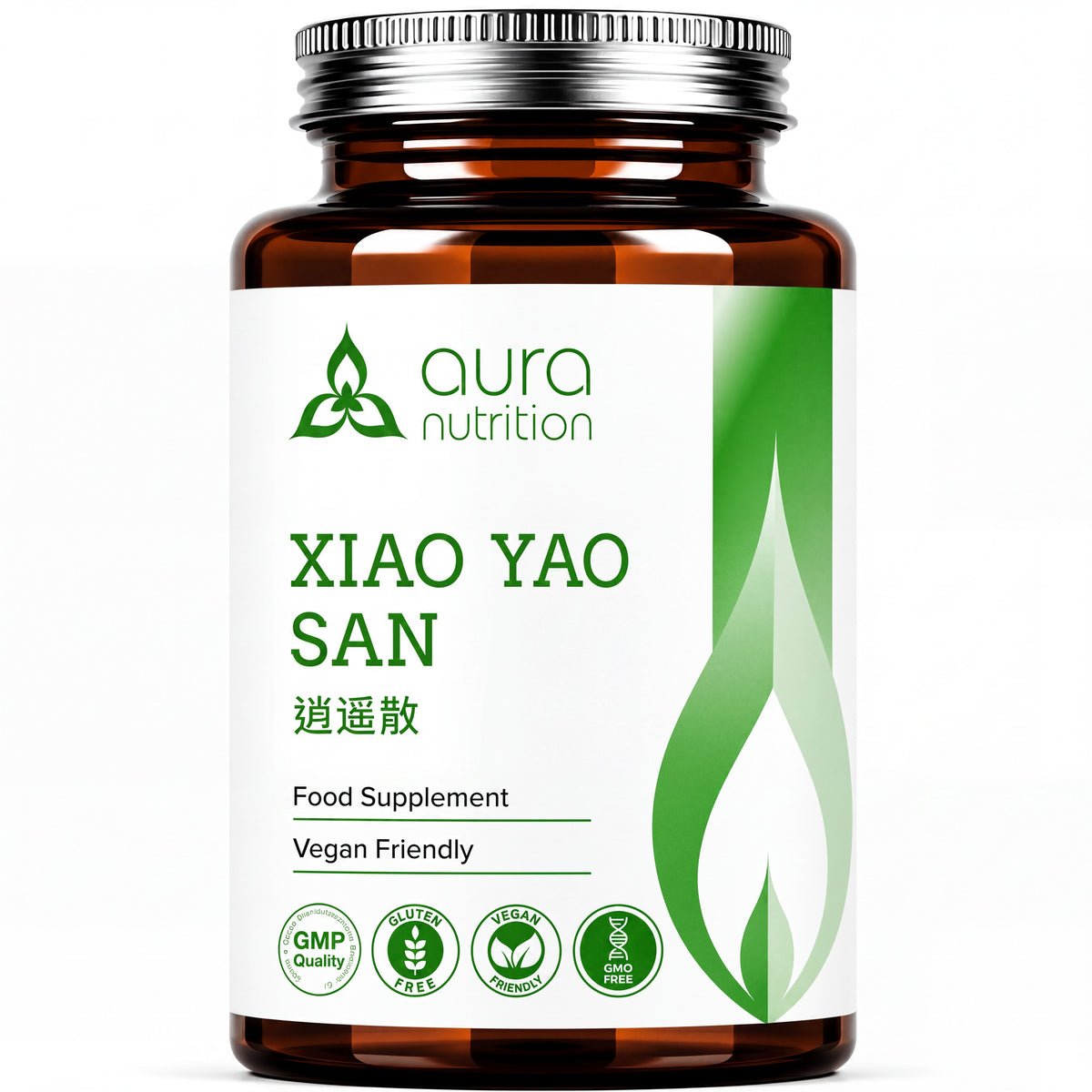
The original Free and Easy Wanderer, and one of the most famous formulas Chinese herbalism has. Xiao Yao San has been around since the Song dynasty, for days when you feel wound up, a bit run down and generally stuck in a rut.
Eight herbs, led by bupleurum, dong quai and white peony, with a little fresh ginger and mint. Made into 5:1 tablets, six a day. Explore the formula
Couldn't load pickup availability
Verified Loox reviews
★★★★☆
"Ive been using the Xiao Yao San to accompany acupuncture for the past few weeks and have noticed some tension release in neck and shoulders. It’s difficult to say what aspect of my healing process is doing the most good,…"
Simon P. · Video review · Verified buyer★★★★★
"seems potent and high quality"
Thomas A. · Video review · Verified buyer★★★★★
"I've had a very positive experience with Xiao Yao San. I started taking it during a period when I was experiencing hormonal changes, mood swings and emotional ups and downs. Since taking it, I've noticed that I feel more balanced…"
★★★★★
"Slowly introduced. No obvious immediate effects. After 2 weeks. I realise life is calmer. Anxiety lessened, joy is there. I feel like me. I will continue. I am taking 2 in the morning and 2 in the evening. I will increase to the…"
★★★★☆
"I tried Xiao Yao San for hormonal balance, mood swings, and cyclical breast tenderness. I took it as directed, and overall my experience was positive and supportive. What I noticed: Calmer mood overall — especially during…"
★★★★★
"I absolutely love Xiao Yao San. I feel great and my skin and hair look healthier. I always look forward to taking it. I will be reordering."
★★★★★
"I have been taking these alongside regular acupuncture sessions and he difference in my overall health and wellbeing is amazing!"
★★★★★
"It's my first time buying this product and I'm very pleased with the quality of the ingredients and the presentation."
Xiao Yao San first turns up around 1110, in the Song government's official book of recipes, the Tai Ping Hui Min He Ji Ju Fang, and pharmacies right across the empire had to make it to the same standard. A national formulary, basically, centuries before anyone else had the idea.
The name comes from Zhuangzi, the Daoist writer, whose very first chapter is called Xiao Yao You, 'wandering free and easy'. The point was feeling unhooked from all the stuff that winds you up. Not a bad thing to name a formula after, really.
It's been tweaked plenty since. The best-known version's Jia Wei Xiao Yao San, with two cooling herbs added in the Ming dynasty, and over in Japan the original goes by Shoyosan and is still widely used.
In Chinese medicine
The Liver's job, in Chinese medicine, is keeping Qi flowing smoothly. Add stress, long hours and all the usual suspects, and that flow's said to get stuck. Textbooks call it Liver Qi stagnation, though you'd probably just call it feeling wound up.
Then the stuck Liver goes and 'bullies' the Spleen, which in this system runs digestion and energy. Hence the classic picture: tense, but tired with it, not that fussed about food, maybe a grumbly tummy. That exact mix is the one Xiao Yao San was put together for.
Bupleurum's the one doing the freeing up. Dong quai and white peony are there to feed the Blood, with poria and white atractylodes looking after the Spleen. Then you've got ginger warming the middle and a little mint to lighten the whole lot. It's gentle and balanced, and we think it's a really clever bit of design.
The Five Elements
Herbalists put the Liver under Wood, the element of spring. Wood likes to grow freely, a bit like a tree wanting room to spread out, and when it's boxed in it gets tense.
Spring
It's Wood's time of year, when everything wants to push upwards.
Liver
It pairs with the Gallbladder and is said to keep Qi flowing smoothly round the body.
Green
Think new shoots and fresh leaves. Fair enough.
Sour
White peony root brings a little touch of it to this formula.
Anger
Or frustration, really, that feeling of being stuck, which is exactly what this family of formulas is about.
Traditional use
Here's where it shows up most, traditionally speaking. They're historical uses, mind, not medical claims.
It's the go-to formula for that tense, sighing, wound-up feeling.
A classic in the run-up to a period, when moods and bloating like to arrive together.
Picked when stress seems to land in the stomach and your appetite goes off a bit.
Exams, new jobs, toddlers. Herbalists have reached for it through every one of them.
This section describes traditional use in Chinese herbal practice. Xiao Yao San is a food supplement and is not intended to diagnose, treat, cure or prevent any disease.
Inside the formula · Ingredients
Chinese formulas are built like a royal court, with a chief herb, ministers and assistants. Amounts are per daily serving of 6 tablets.
Chief
Bupleurum's the herb for getting stuck Liver Qi moving again. Herb Glossary
Ministers
Dong quai and white peony nourish the Blood, the idea being that a well-fed Liver can finally ease off a bit. Herb Glossary
Assistants
Poria and white atractylodes are the Spleen's helpers. Ginger adds warmth, and there's a pinch of mint (only a pinch, it's not toothpaste) to give it a lift. Herb Glossary
Envoy
And honey-fried liquorice ties the whole formula together. Herb Glossary
Inactive ingredients: Cassava starch, Hypromellose, Magnesium stearate, Polyethylene glycol, Talc.
These are used in very small amounts to form and coat the tablets. They don't add to the formula itself.
How to take
Tablets with water.
Tablets with water.
Most people take a formula for several weeks.
Always follow the label. If you take any medication, are pregnant or breastfeeding, please speak to your GP or pharmacist before use.
Choosing between them
| Compare | Xiao Yao San | Jia Wei Xiao Yao San |
|---|---|---|
| First recorded | Song dynasty, around 1110 | Ming dynasty, 1500s |
| The idea | Free up stuck Qi and look after the Spleen | Free up stuck Qi and cool things down |
| Herbs | 8, including fresh ginger and mint | 8, including gardenia and tree peony bark |
| Character | Gentle and balanced | A little cooler |
| Often chosen when | Tension comes with tiredness and a sluggish tummy | Tension comes with warmth or a short temper |
Traditionally it's for that wound-up, stuck feeling, especially when tiredness or a grumbly tummy comes along with it, and it's long been a favourite around the monthly cycle too. As a food supplement, though, it isn't meant for any medical condition, mind.
If things feel tense and a bit hot (flushed, snappy), herbalists lean towards Jia Wei. More tense and tired? Then plain Xiao Yao San. Still can't decide? Drop us a line.
Yep. 'Wan' means pills and 'San' means powder, so it's the same recipe in a different form, and ours are concentrated tablets.
It's three in the morning and three in the evening, and a bottle of 60 lasts ten days.
Please check with your GP first. Dong quai especially isn't one to mix with blood thinners like warfarin.
It varies a lot. Some people take it through a busy patch, while others have kept it in their routine for years.
Related formulas
Verified Loox reviews
Food supplements should not be used as a substitute for a varied, balanced diet and a healthy lifestyle. Not intended to diagnose, treat, cure or prevent any disease. Keep out of reach of children.


