

Kidney Yin
Kidney Yin deficiency (think slow drying out with the years) and this is the formula most herbalists reach for first. Pretty much the default.


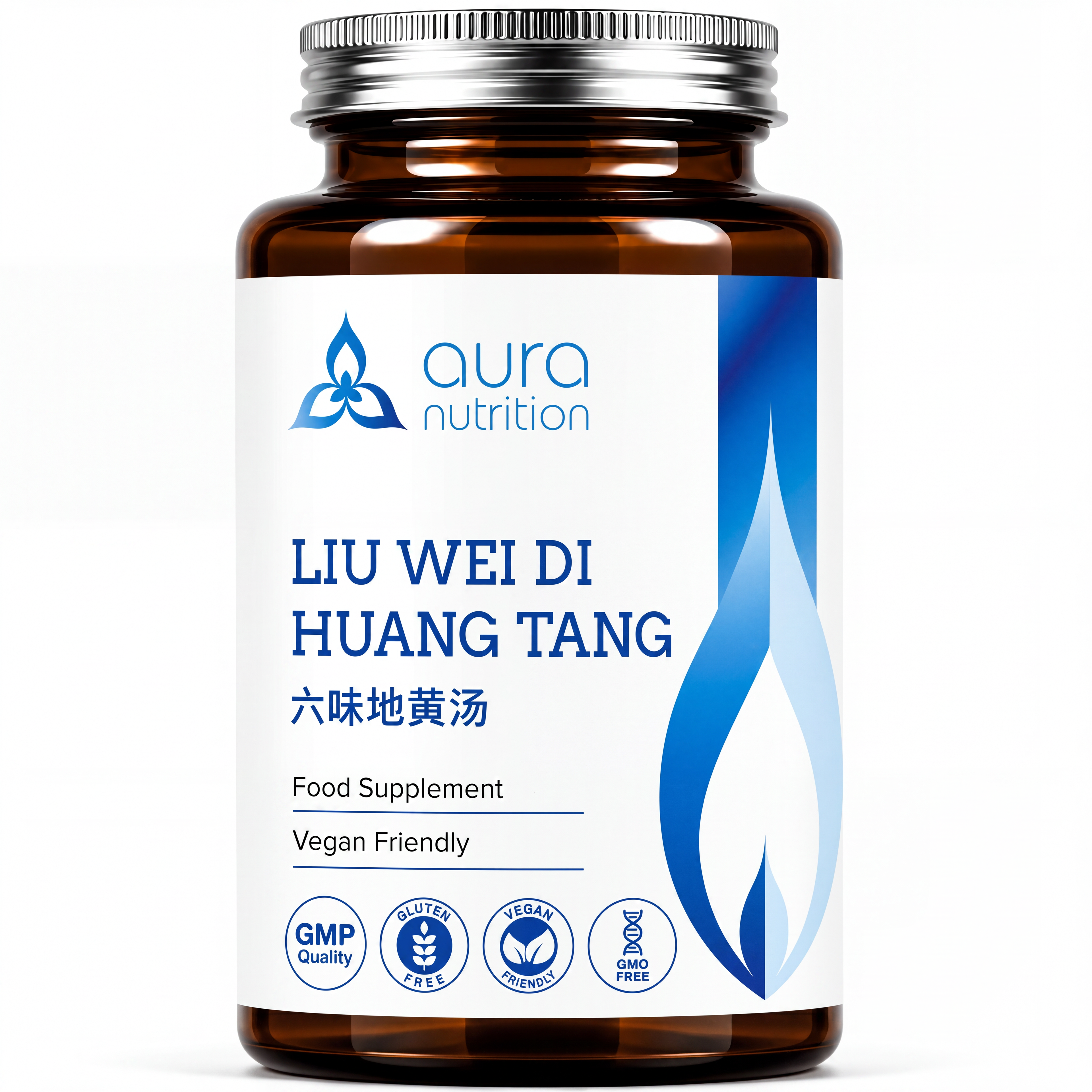
Traditional Chinese herbal formula
六味地黄丸 · Six Ingredient Rehmannia · also known as Liu Wei Di Huang Tang
If Chinese herbalism had a house formula for Kidney Yin, this would be it. Liu Wei Di Huang Wan is about as well known in China as cod liver oil once was here, the sort of thing grandparents keep in the cupboard. Herbalists used it for that dried-out, warm-at-night, running-low feeling that tends to creep in with age.
Six herbs, led by prepared rehmannia, with cornus fruit and Chinese yam. Made into 5:1 tablets. Six a day, and a bottle lasts ten days. Explore the formula
Couldn't load pickup availability
Verified Loox reviews
★★★★★
"I useally take tublets eyery morning. I think feel good."
Takeshi S. · Video review · Verified buyer★★★★★
"The tablets are easy to swallowi have had no side affects. Back pain is better and feel relaxed not anxious. I haven’t taken them long enough to give a detailed review but so far so good…"
★★★★★
"Very very quick delivery. Placed order in evening and order was with me next morning. Can’t fault it at all very impressed!"
★★★★☆
"Subtle but powerful - a really lovely supportive and balancing herbal medicine. Also so easy to take; a world away from the days of boiling Chinese herbs for hours!"
★★★★★
"This is a great product. Highly recommended"
★★★★☆
"good quality product, better than others, can feel difference in gut"
Funny thing is, it started out as a children's formula. Qian Yi, the great Song dynasty children's doctor, gave it to little ones who were slow to grow, and his student Yan Xiaozhong later gathered up his methods in the Xiao Er Yao Zheng Zhi Jue (the Key to Children's Medicines and Patterns), published in 1119.
He didn't start from scratch, mind. Qian Yi took Shen Qi Wan, an older Kidney formula from Zhang Zhongjing's Jin Gui Yao Lue of around 200 AD, and pulled out its two hot herbs, cinnamon and aconite, on the grounds that children have warmth to spare already. What was left? A cooler, gentler six-herb recipe.
Later doctors noticed it suited grown-ups too, older ones especially, and it turned into the base for a whole family of formulas. Two cooling herbs on top gives you Zhi Bai Di Huang Wan, ophiopogon and schisandra gives you Mai Wei Di Huang Wan, and the list goes on from there.
In Chinese medicine
Think of the Kidneys, in Chinese medicine, as your savings account. They store the Essence you're born with and they hold the body's Yin, the cooling, moistening side, and its Yang, the warming, driving side. Over the years, the theory says, the account slowly gets drawn down, and Yin's usually the first to go.
Less Yin means less to cool and moisten with. Herbalists describe it in quite a homely way: hands and feet that feel warm, waking up with a dry mouth, getting hot and bothered as the evening wears on, achy back and knees. Nothing dramatic, honestly. More of a slow drying out, like a pot plant someone forgot to water.
What it's famous for is the balance, three herbs to tonify and three to drain. Rehmannia, cornus and yam do the nourishing for the Kidney, Liver and Spleen, while alisma, tree peony bark and poria each clear out whatever might build up as a result. Nothing gets clogged. Rather neat, we think.
The Five Elements
The Kidneys sit under Water, the element of winter, depth and storage. Water is the body's reservoir. Liu Wei Di Huang Wan is all about topping it back up.
Winter
Water's season, a time for conserving and storing rather than spending.
Kidney
Paired with the Bladder, and said to hold your deepest reserves of Yin and Yang.
Black
Deep water, dark as night. Prepared rehmannia, cooked until it's jet black, fits right in.
Salty
Water's taste. The old books say salt leads into the Kidneys.
Fear
Or a lack of quiet confidence. Water's emotion, and the opposite of feeling well grounded.
Traditional use
This is how herbalists have used it over the centuries. It describes tradition, not anything we're claiming it will do.
Kidney Yin deficiency (think slow drying out with the years) and this is the formula most herbalists reach for first. Pretty much the default.
Picked for people who felt warm in the palms and soles, or got hotter and drier as the day went on.
Chinese medicine files the lower back under the Kidneys, so achy, weak knees and a tired back were very much part of the story.
A lot of practitioners use it as a base to build on, and they'll add herbs to suit whoever's in front of them.
This section describes traditional use in Chinese herbal practice. Liu Wei Di Huang Wan is a food supplement and is not intended to diagnose, treat, cure or prevent any disease.
Inside the formula · Ingredients
Chinese formulas are organised like a royal court. Here, three nourishing herbs are each paired with a draining one. Amounts are per daily serving of 6 tablets.
Chief
Prepared rehmannia is steamed and dried over and over until it's black and sticky, a bit like a soft prune. It's the classic herb for nourishing Kidney Yin and Essence, and there's more of it than anything else here. Herb Glossary
Ministers
Cornus fruit, small, red and rather sour, backs up the Liver and Kidneys. Chinese yam's the one looking after the Spleen, with a hand for the Kidneys too. Herb Glossary
Assistants
These three are the 'drainers', each one paired off with a tonic. Alisma's matched with rehmannia, tree peony bark with cornus, and poria with yam. Herb Glossary
Inactive ingredients: Cassava starch, Hypromellose, Magnesium stearate, Polyethylene glycol, Talc.
These are used in very small amounts to form and coat the tablets. They don't add to the formula itself.
How to take
Tablets with water.
Tablets with water.
Most people take a formula for several weeks.
Always follow the label. If you take any medication, are pregnant or breastfeeding, please speak to your GP or pharmacist before use.
Choosing between them
| Compare | Liu Wei Di Huang Wan | Zhi Bai Di Huang Wan |
|---|---|---|
| First recorded | Song dynasty, 1119 | Ming and Qing dynasties |
| The idea | Nourish Kidney Yin, gently and evenly | Nourish Kidney Yin and clear heat |
| Herbs | 6, the original family recipe | 8: the same six plus anemarrhena and phellodendron |
| Character | Balanced, very slightly cool | Noticeably cooler |
| Often chosen when | Things feel a bit dry and depleted | Dryness comes with real heat, especially at night |
In Chinese medicine terms, Kidney Yin deficiency. Herbalists picture a slow drying out, so you get warm evenings, a dry mouth and a tired back and knees. It's a food supplement though, so it isn't meant for any medical condition.
Zhi Bai is basically Liu Wei with two cooling herbs added on. Herbalists move over to it when there's obvious heat as well as dryness, but if it's mostly dryness and feeling depleted, plain Liu Wei's the usual pick.
Three in the morning, three at night. A bottle of 60 gives you ten days.
It's a gentle one, as these go. Still, if you're pregnant, breastfeeding or on regular medication, run it past your GP first. Tree peony bark's traditionally used with care in pregnancy too, which is one more reason to ask.
It can, a little. Rehmannia's quite rich, and people with a touchy stomach sometimes notice it. Having the tablets with food usually sorts that out, and if it doesn't, stop and have a chat with a herbalist.
'Six flavour rehmannia', more or less. Liu is six, Wei is flavours, Di Huang is rehmannia and Wan means pill. Chinese formula names are refreshingly literal like that.
Related formulas
Verified Loox reviews
Food supplements should not be used as a substitute for a varied, balanced diet and a healthy lifestyle. Not intended to diagnose, treat, cure or prevent any disease. Keep out of reach of children.


