

Lung and Kidney Yin
The defining pattern's dryness that runs from the Kidneys right up to the Lungs.


Traditional Chinese herbal formula
麦味地黄丸 · Ophiopogon, Schisandra & Rehmannia · also known as Ba Xian Chang Shou Wan
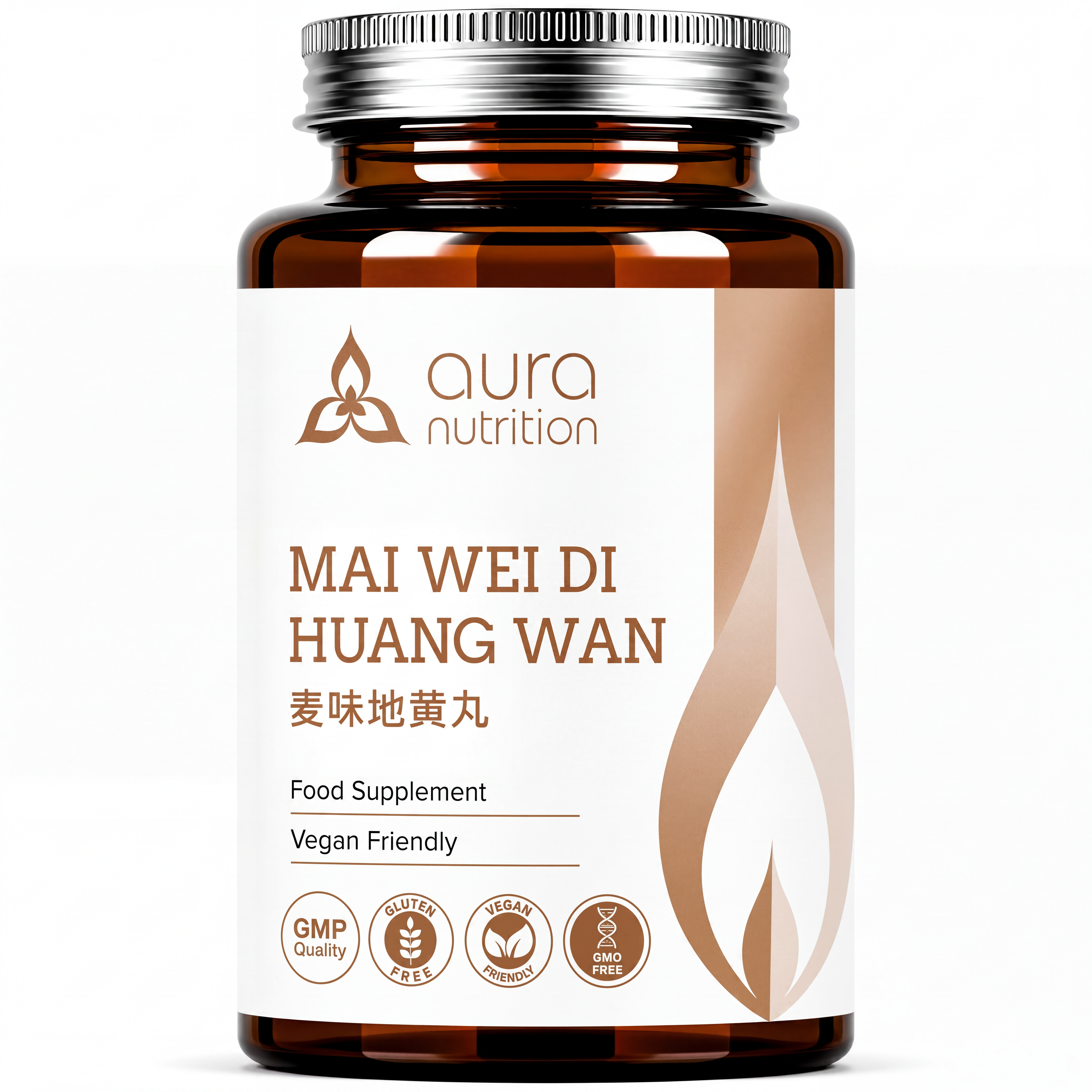
Mai Wei Di Huang Wan is the famous Six Ingredient Rehmannia with two extra herbs: ophiopogon (mai dong) and schisandra (wu wei zi). That's where the name comes from. Herbalists picked it when Kidney Yin felt low and the dryness seemed to reach up to the Lungs too.
Eight herbs, led by rehmannia, made into 5:1 tablets. You take six a day, and a bottle lasts ten days. Explore the formula
Couldn't load pickup availability
Verified Loox reviews
★★★★★
"It works very well! Thank you for making it available to purchase on line!!!"
★★★★★
"great as a springtime tonic for kidneys and adrenals."
★★★★★
"The Bi Yan Pian after 6 weeks of use has made a remarkable improvement to my morning coughing fits from Rhinitis so much less mucous on my lungs and nose clearer. It has not completely cured it yet, lets see what happens after…"
★★★★★
"Recommended these by my acupuncturist for better hormone balance and liver detoxification. I felt better within a few of days of using the Wen Jin Tang - uplifted, more relaxed, happier, sleeping better. Highly recommend this…"
★★★★★
"I bought Wen Jing Tang since I started to bleed between periods. Quite amazed to find that bleeding stopped after 2 days of taking this medication."
★★★★★
"I was having issues with migraines and anger. And a beautiful TICM doctor suggested me this. Since taking the tablets along side my hydrogen, Alkaline water I have so much energy and my head feels amazing. It has definitely…"
It all starts with Qian Yi, the great children's doctor of the Song dynasty. In 1119 he took an older Kidney formula, pulled out its two hot herbs (cinnamon and aconite) and published what was left as Liu Wei Di Huang Wan. Kids didn't need the fire, he reckoned. That leftover became the most famous Yin formula in Chinese medicine, which isn't bad going.
Later doctors just kept adding to it, two herbs here, two herbs there. Put in ophiopogon and schisandra and you've got this one, which turns up in later imperial-era books and is now a standard pharmacy pill in China. The name's only a contraction, really: Mai from mai dong, Wei from wu wei zi, Di Huang from rehmannia.
You'll also see it called Ba Xian Chang Shou Wan, the 'Eight Immortals Longevity Pill'. The Eight Immortals are those Daoist folk heroes painted on Chinese plates and scrolls, and there are eight herbs, so somebody clearly had fun naming it.
In Chinese medicine
Yin, in Chinese medicine, is the cool, moist side of you, and the Kidneys are said to keep the deepest reserve of it. Wear that down with age, late nights or years of burning the candle at both ends, and you end up dry with a bit of warmth on top. Not real excess heat, mind. Just too little cooling to keep things level.
The Lungs sit up top and like being moist. Herbalists described Lung and Kidney as mother and child, with the Lung's Metal feeding the Kidney's Water, so if Kidney Yin's low for long enough the Lungs are said to dry out too. Think a parched throat and feeling warm at night. That's the picture.
Students learn the six base herbs as 'three that build, three that drain'. On the building side you've got rehmannia, cornus fruit and Chinese yam. Water plantain, tree peony bark and poria sit on the other side, there so all that richness doesn't clog things up. Then ophiopogon comes in to moisten the Lungs, plus schisandra, which the Chinese call the five-flavour berry because apparently it tastes of all of them at once, to hold everything in.
The Five Elements
The Kidneys belong to Water, winter's element and the body's cooling, moistening reserve. In the Five Element cycle Metal (the Lungs) is Water's mother, and that's exactly the link this formula's built on.
Winter
Water's the season for storing up, and here it's Yin that's being stored.
Kidneys
They're said to hold your deepest Yin, and rehmannia's the classic herb for it.
Black
Water's colour. Prepared rehmannia root is a dark, glossy black, rather like a liquorice wheel.
Salty
That's Water's taste, and schisandra's said to have it along with all four of the others.
Fear
Fear's said to drain the Kidneys, and herbalists say long stretches of stress do much the same to Yin.
Traditional use
Here's how Chinese herbalists have put Mai Wei Di Huang Wan to use. We're talking tradition, and none of it's a medical claim.
The defining pattern's dryness that runs from the Kidneys right up to the Lungs.
Picked when that dry, papery feeling at the back of the throat just won't go away.
Herbalists chose it when feeling warm at night seemed to come from too little Yin, not too much heat.
Yin's said to dwindle as we age, so it's a familiar choice in the older years.
This section describes traditional use in Chinese herbal practice. Mai Wei Di Huang Wan is a food supplement and is not intended to diagnose, treat, cure or prevent any disease.
Inside the formula · Ingredients
Laid out like a Chinese royal court, with rehmannia in charge. Amounts are per daily serving of 6 tablets.
Chief
Rehmannia gets the biggest single amount, and it's what herbalists use to nourish Kidney Yin. Herb Glossary
Ministers
Cornus fruit and Chinese yam back up the Kidneys. Ophiopogon, a pale, plump little tuber, moistens the Lungs, and schisandra holds things in. Herb Glossary
Assistants
These are the three that drain, water plantain, tree peony bark and poria, so all that richness doesn't sit heavy. Herb Glossary
Inactive ingredients: Cassava starch, Hypromellose, Magnesium stearate, Polyethylene glycol, Talc.
These are used in very small amounts to form and coat the tablets. They don't add to the formula itself.
How to take
Tablets with water.
Tablets with water.
Most people take a formula for several weeks.
Always follow the label. If you take any medication, are pregnant or breastfeeding, please speak to your GP or pharmacist before use.
Choosing between them
| Compare | Mai Wei Di Huang Wan | Liu Wei Di Huang Wan |
|---|---|---|
| First recorded | Later imperial China, after 1119 | Song dynasty, 1119 |
| The idea | Nourish Kidney and Lung Yin | Nourish Kidney Yin |
| Herbs | 8, including ophiopogon and schisandra | 6, led by rehmannia |
| Character | Moistening, slightly astringent | Nourishing, slightly cooling |
| Often chosen when | Dryness reaches the throat and Lungs | The focus is the Kidneys alone |
The name's a shorthand built from three herbs. Mai comes from mai dong, which is ophiopogon, Wei's from wu wei zi, our friend schisandra, and Di Huang is plain rehmannia. Wan just means pill. Ours is a tablet, but the name stuck.
That's its nickname, Ba Xian Chang Shou Wan. It has eight herbs, the Eight Immortals are famous Daoist folk figures, and longevity always sold well in imperial China.
Liu Wei's the base, and it keeps its focus on the Kidneys. Herbalists add ophiopogon and schisandra when the dryness seems to reach right up to the throat and Lungs.
It's three in the morning and three in the evening, six a day, and a bottle lasts ten days.
Pregnant or breastfeeding? Please talk to your GP first, as tree peony bark's usually avoided in pregnancy. Schisandra can change how the liver handles some prescription drugs too, so if you take any regular medicine, check with your GP or pharmacist.
It can, a bit. Rehmannia's rich, and some people find it heavy going on a sensitive tummy, so taking the tablets with food usually suits better. That's partly why the poria and Chinese yam are in there.
Related formulas
Verified Loox reviews
Food supplements should not be used as a substitute for a varied, balanced diet and a healthy lifestyle. Not intended to diagnose, treat, cure or prevent any disease. Keep out of reach of children.


