

Wind in the head
Its classic use: Wind that's said to have lodged in the head and nose, with that thick, heavy feeling.


Chinese patent herbal formula
鼻炎片 · Magnolia Flower · also known as
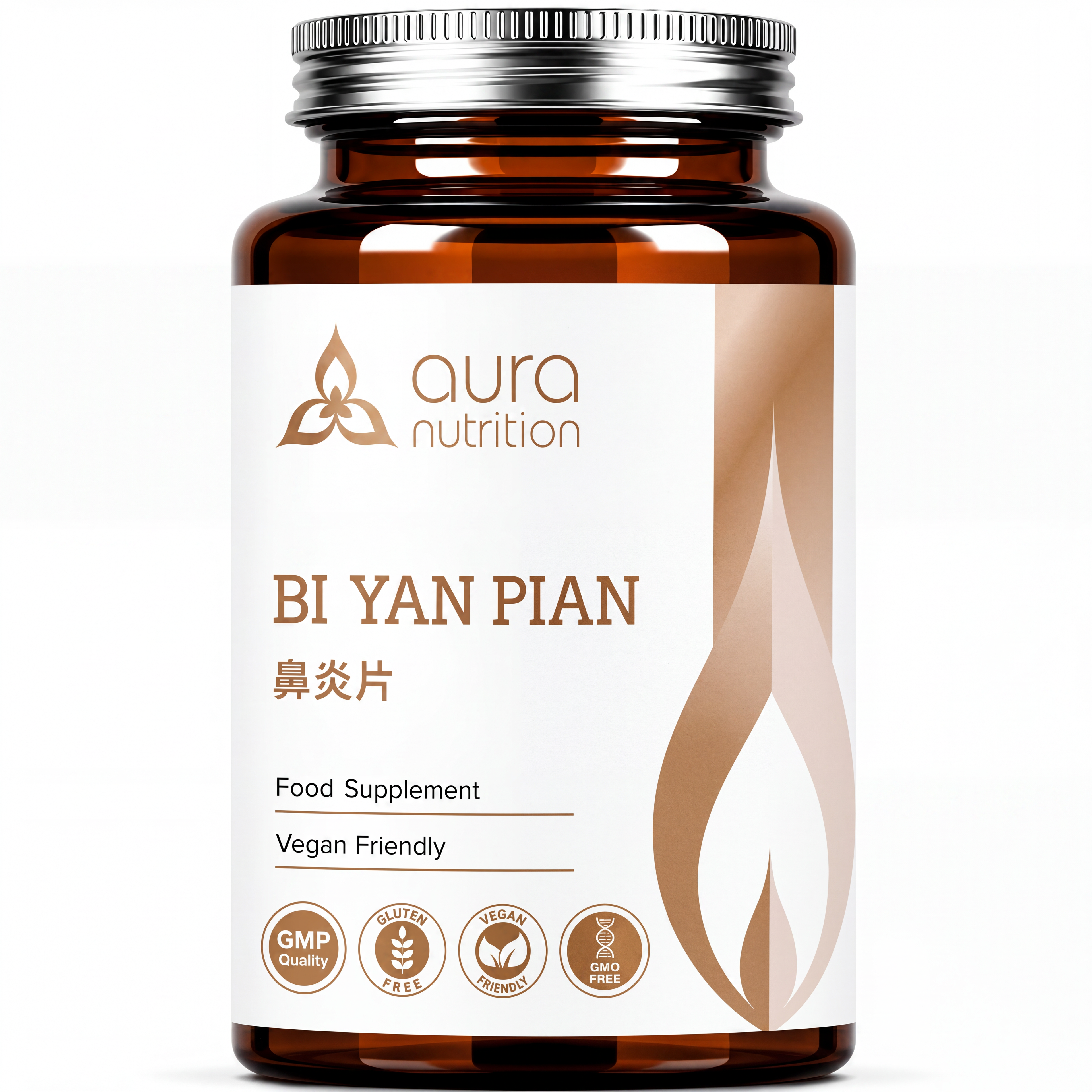
A modern Chinese pharmacy formula built around a very old idea: that magnolia flower buds open up the nose. Bi Yan Pian brings together eleven herbs herbalists have long linked with Wind in the head and the Lung's 'opening', which in Chinese medicine is the nose. That thick, stuffy-headed feeling is its traditional patch.
Magnolia flower, siler, schizonepeta, forsythia and seven more, made into 5:1 tablets. Ephedra-free. Six a day, and a bottle lasts ten days. Explore the formula
Couldn't load pickup availability
Verified Loox reviews
★★★★★
"My daughter's eczema and rhinitis has really cleared up after taking these tablets. I would recommend"
Melissa M. · Video review · Verified buyer★★★★★
"Had a very painful sinus infection after a bout of flu. Nothing was helping (sinus rinses, vitamin C etc) it was lingering and I felt miserable. Read about these tablets on a forum and thought I’d give them a try before resorting…"
★★★★★
"Close to FFTSS (Fang Feng Tong Sheng San) in efficacy re cold and nasal complaints. In my experience, helped with itching and hayfever and sinusitis too. Good as a backup if you’re running out of your TCM doctor’s personal herbal…"
★★★★★
"Absolutely magic for the high fever alergie, my husband is more then pleased how effective this product are!"
★★★★★
"These are wonderful products would highly recommend both Fang Feng and Bi Yan Pian"
★★★★★
"I am never without these they are just brilliant for anyone with sinus problems"
★★★★☆
"a main part of my daily tablet intake for prostitus, still early days,but hoping it will work where pharmacom has not"
★★★★★
"This seems to help my daughter with wheeziness and eczema :)"
Right, let's be upfront about this one. Bi Yan Pian isn't some ancient classic, it's a Chinese patent formula, one of those ready-made tablets Chinese pharmaceutical factories standardised in the 20th century. 'Bi' is nose and 'pian' is tablet. Chinese pharmacy names don't really do mystery.
The ideas underneath are a lot older, mind. Magnolia flower bud (xin yi) is in the Shen Nong Ben Cao Jing, China's oldest herbal, pulled together around the Han dynasty, and so is dahurian angelica. Then in 1253 the Song physician Yan Yonghe published Xin Yi San, a magnolia formula for a blocked-up head, and it shares a good few herbs with this one.
What you'd buy in a Chinese pharmacy has a few extra herbs, ephedra among them. We've left ephedra out completely. It's a herb with a lot of baggage and it's got no business in a food supplement, simple as that.
In Chinese medicine
There's an old line in Chinese medicine that the Lung 'opens into the nose'. So if Wind (one of the outside influences in this system) gets into the Lung, the nose is where you'd notice first. It can blow in with Cold or with Heat, and it's said to love the top of the body.
Herbalists pictured a head that feels thick and blocked, a heavy forehead, that bunged-up sensation we all know. With Heat in the mix it all feels hotter and stickier. And if it hangs about? Then they'd say the Wind's lodged and the Lung Qi has got stuck.
So the formula does a bit of everything. Magnolia flower and dahurian angelica are the classic pair for opening up the head, and the furry little magnolia buds smell sharp and aromatic. Siler, schizonepeta and wild chrysanthemum scatter Wind, while forsythia and anemarrhena cool any Heat. Platycodon lifts it all up to the Lung and nose, and schisandra stops the whole thing being too dispersing.
The Five Elements
Metal is the Lung's element, and the nose is the Lung's window on the outside world. A formula aimed squarely at the nose was always going to belong here.
Autumn
Metal's season, when the air dries out and the wind gets up.
Lung
Opens into the nose, they say, and looks after the skin and surface.
White
Metal's colour. Magnolia blossom often comes in white as well, nicely enough.
Pungent
Magnolia flower, angelica and schizonepeta are all pungent, and that's the taste linked with opening things up.
Grief
Metal's emotion. Even in a nose formula, the old system won't separate body from feeling.
Traditional use
Here's how these herbs have been used in the tradition. We're describing history, so please don't take it as a medical claim.
Its classic use: Wind that's said to have lodged in the head and nose, with that thick, heavy feeling.
Picked when the stuffy picture runs warm and sticky rather than cold.
An old favourite for spring and autumn, when the wind is supposedly at its busiest.
Herbalists use these herbs to get Lung Qi moving out through its 'opening'.
This section describes traditional use in Chinese herbal practice. Bi Yan Pian is a food supplement and is not intended to diagnose, treat, cure or prevent any disease.
Inside the formula · Ingredients
Patent formulas don't always map neatly onto the classical court roles, but this one comes close. Amounts are per daily serving of 6 tablets.
Chief
Magnolia flower bud's the herb most tied to the nose in all of Chinese herbalism, and it's where the formula gets its English name. Herb Glossary
Ministers
Dahurian angelica partners up with the magnolia. Siler and schizonepeta, meanwhile, scatter Wind from the surface. Herb Glossary
Assistants
Forsythia, wild chrysanthemum and anemarrhena are the cooling bunch, there for Heat. Schisandra holds things together. Then Chinese chive bulb, warm and pungent, said to get Yang Qi moving through the chest. Herb Glossary
Envoys
Platycodon carries everything up to the Lung and nose, and liquorice harmonises the lot. Herb Glossary
Inactive ingredients: Cassava starch, Hypromellose, Magnesium stearate, Polyethylene glycol, Talc.
These are used in very small amounts to form and coat the tablets. They don't add to the formula itself.
How to take
Tablets with water.
Tablets with water.
Most people take a formula for several weeks.
Always follow the label. If you take any medication, are pregnant or breastfeeding, please speak to your GP or pharmacist before use.
Choosing between them
| Compare | Bi Yan Pian | Yu Ping Feng San |
|---|---|---|
| First recorded | 20th-century Chinese patent formula | Song to Yuan era (sources differ) |
| The idea | Scatter Wind and open the nose | Strengthen the body's outer defences |
| Herbs | 11, led by magnolia flower bud | 3: astragalus, white atractylodes and siler |
| Character | Dispersing and a little cooling | Steadying and building |
| Often chosen when | Wind seems to have already settled in the head | The defences feel thin and Wind keeps getting in |
In Chinese medicine terms it's for Wind lodged in the head and nose, Wind-Heat especially. In plain English, that thick, blocked-up, heavy-headed feeling. It's a food supplement, though, not a medicine.
Nope. Some Chinese versions do have ephedra (ma huang) in them, and that's got no place in a food supplement. Ours is ephedra-free.
No, and we'd rather just be honest with you. It's a 20th-century Chinese patent formula. The herbs in it are a different story, magnolia flower bud above all, and go back much further.
Three with breakfast-ish, three in the evening. That gets you ten days out of a bottle.
If you're expecting, breastfeeding or on regular meds, have a word with your GP before you start. There's liquorice in it too, and that can push blood pressure up a little, so go carefully if yours is on the high side or you're on tablets for it. Anything that's dragging on or getting worse? That's one for your doctor, not for us.
Mostly because of the magnolia buds (xin yi). Chinese herbalists have tied them to the nose for something like two thousand years.
Related formulas
Verified Loox reviews
Food supplements should not be used as a substitute for a varied, balanced diet and a healthy lifestyle. Not intended to diagnose, treat, cure or prevent any disease. Keep out of reach of children.


