

Heart Blood stasis
The pattern dan shen is best known for: Blood that's said to have slowed and pooled around the chest.


Modern Chinese patent formula
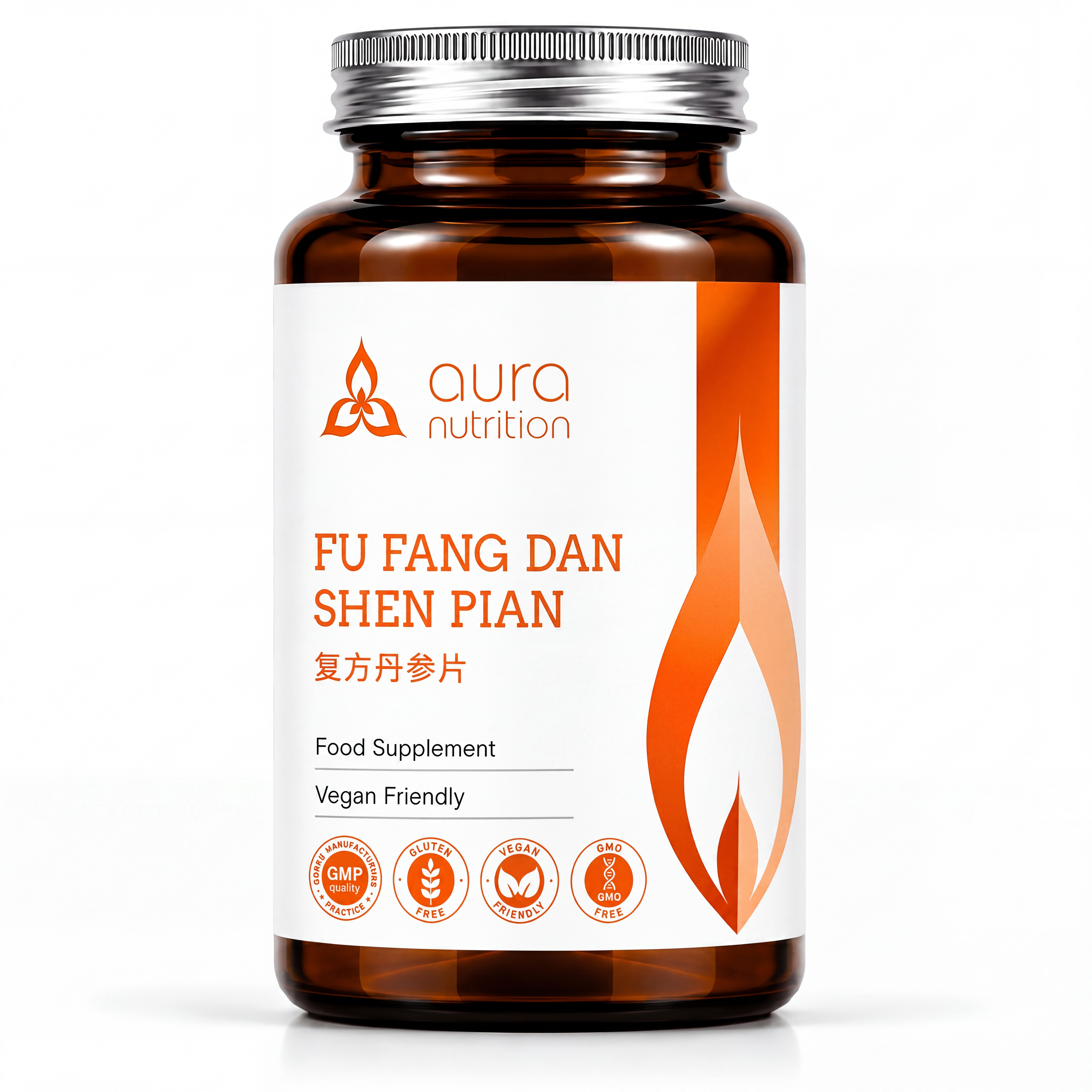
复方丹参片 · Red Sage & Notoginseng · also known as Compound Dan Shen Tablets
Just two herbs. Fu Fang Dan Shen Pian pairs red sage root with notoginseng, two of the best-known Blood-moving herbs in the Chinese materia medica, and it's been a fixture of Chinese pharmacy shelves for decades.
Dan shen does most of the work here, with a smaller amount of notoginseng (san qi) alongside. Made into 5:1 tablets, six a day. One bottle lasts ten days. Explore the formula
Couldn't load pickup availability
Verified Loox reviews
★★★★★
"I reordered the pack of 6 bottles after I tried the first one"
Mana W. · Video review · Verified buyer★★★★★
"I use Dan Shen to help manage Long Covid symptoms. I have found it very effective. It's not a cure, but it has definitely helped with vascular-based effects."
★★★★★
"I have been using this product for a couple of years or so and find it is helping with my digestion."
★★★★★
"I am happy with this product. Great delivery and service and does not upset my stomach"
★★★★★
"Efficient service"
'Fu fang' means compound, so the name's basically saying 'dan shen, plus a friend'. You won't find it in any ancient book, mind. It's a 20th-century Chinese patent formula, and you'd struggle to name a more widely used one. In China the standard version tips in a pinch of borneol too (it smells a lot like camphor). Ours sticks to just the two herbs.
Dan shen itself is properly old, though. You'll find it in the Shen Nong Ben Cao Jing, China's oldest herbal, pulled together roughly two thousand years ago. Its name means 'red root', and fair enough: dig one up and it's a startling brick red. There's an old saying that dan shen on its own does the work of Si Wu Tang, the four-herb Blood formula. A bit much, maybe, but it shows how highly herbalists rated it.
Notoginseng (san qi) came into the books much later. Li Shizhen wrote it up in his great Ben Cao Gang Mu in 1578, and it picked up the nickname jin bu huan, 'not to be swapped for gold'. Put the two together and you get a neat little pairing that's still everywhere in China.
In Chinese medicine
OK, so in Chinese medicine Blood's meant to keep on the move. Let it dawdle or pool up somewhere and you've got what the old texts call Blood stasis (not a pretty phrase, we know). How do herbalists spot it? They'll talk about a fixed, stabbing sort of discomfort that stays put, plus a dusky, purplish tinge to the lips and tongue. Often there's a heavy, stuffy feeling as well.
The Heart governs the Blood and the vessels in this system, so stasis in the chest area gets special attention. The old books call it xiong bi, roughly 'chest blockage'. Herbalists turned to dan shen for exactly that picture.
Dan shen is said to move the Blood and cool it a little at the same time. San qi moves Blood too, but it's famous for being two-sided: it gets things flowing without making them run wild. Two herbs, one clear job.
The Five Elements
Herbalists put the Heart under Fire, the element of summer. Fire is warmth and circulation, the pulse that keeps everything moving. This formula is aimed squarely at that movement.
Summer
Fire's season, when warmth and activity peak.
Heart
Ruler of the Blood and vessels in Chinese medicine, and the main focus here.
Red
Dan shen literally means 'red root'. You could hardly ask for a better match.
Bitter
Dan shen is bitter, and san qi has a bitter edge under its sweetness.
Joy
Fire's emotion. The Heart is also said to house the Shen, the spirit or mind.
Traditional use
Here's how these two herbs have been used in China. We're talking about tradition and history here, not making medical claims.
The pattern dan shen is best known for: Blood that's said to have slowed and pooled around the chest.
In the old books, discomfort that stays in one spot and feels sharp is a classic sign of stasis.
Lots of older folk in China take it, and for plenty of them it's been part of the daily routine for years.
Some practitioners like it as a simple two-herb base and then build other formulas around it. Nice and uncomplicated, that.
This section describes traditional use in Chinese herbal practice. Fu Fang Dan Shen Pian is a food supplement and is not intended to diagnose, treat, cure or prevent any disease.
Inside the formula · Ingredients
Not much of a royal court with only two members, but the roles still apply. Amounts are per daily serving of 6 tablets.
Chief
Red sage root, in a large amount. It moves and gently cools the Blood, and it's the reason the formula exists. Herb Glossary
Minister
Notoginseng backs dan shen up. It moves Blood too, and herbalists value it for keeping that movement steady. Herb Glossary
Inactive ingredients: Cassava starch, Hypromellose, Magnesium stearate, Polyethylene glycol, Talc.
These are used in very small amounts to form and coat the tablets. They don't add to the formula itself.
How to take
Tablets with water.
Tablets with water.
Most people take a formula for several weeks.
Always follow the label. If you take any medication, are pregnant or breastfeeding, please speak to your GP or pharmacist before use.
Choosing between them
| Compare | Fu Fang Dan Shen Pian | Tao Hong Si Wu Tang |
|---|---|---|
| First recorded | 20th century, as a Chinese patent formula | Qing dynasty, 1700s |
| The idea | Move the Blood, with the Heart in mind | Nourish the Blood and move it |
| Herbs | 2: red sage and notoginseng | 6, including peach kernel and safflower |
| Character | Simple and focused | Richer and more nourishing |
| Often chosen when | The picture is stasis, mostly in the chest area | Stasis comes with Blood running low |
'Fu fang' means compound, 'dan shen' is red sage root and 'pian' means tablet. So, compound red sage tablets. Not the most poetic name we sell.
Same genus, very different plant. Dan shen is Salvia miltiorrhiza, and it's the root that's used, not the leaves. You wouldn't stuff a chicken with it.
Three in the morning and three in the evening, so six a day. A bottle lasts ten days.
Please avoid it if you're pregnant or breastfeeding, as Blood-moving herbs aren't for pregnancy. Dan shen and san qi can both affect how blood clots, so don't take it alongside warfarin, aspirin, clopidogrel or any other blood thinner, and stop it before surgery. If you're on any medication at all, or have a heart condition, check with your GP first.
Close. Most Chinese versions also contain a small amount of borneol. Ours is just red sage and notoginseng.
In China lots of people take it for long stretches. We'd suggest talking to a qualified practitioner if you're planning to stay on it for months.
Related formulas
Verified Loox reviews
Food supplements should not be used as a substitute for a varied, balanced diet and a healthy lifestyle. Not intended to diagnose, treat, cure or prevent any disease. Keep out of reach of children.


