

Blood stasis low down
The textbook use: a fixed, heavy, stuck feeling in the lower abdomen.


Traditional Chinese herbal formula
桂枝茯苓丸 · Cinnamon Twig & Poria · also known as Keishibukuryogan
Five herbs in roughly equal measure, and one of the oldest women's formulas in Chinese medicine. Gui Zhi Fu Ling Wan is the classic for what herbalists call Blood stasis in the lower abdomen. In plain terms, a fixed, heavy, stuck feeling low down, often tied up with the monthly cycle.
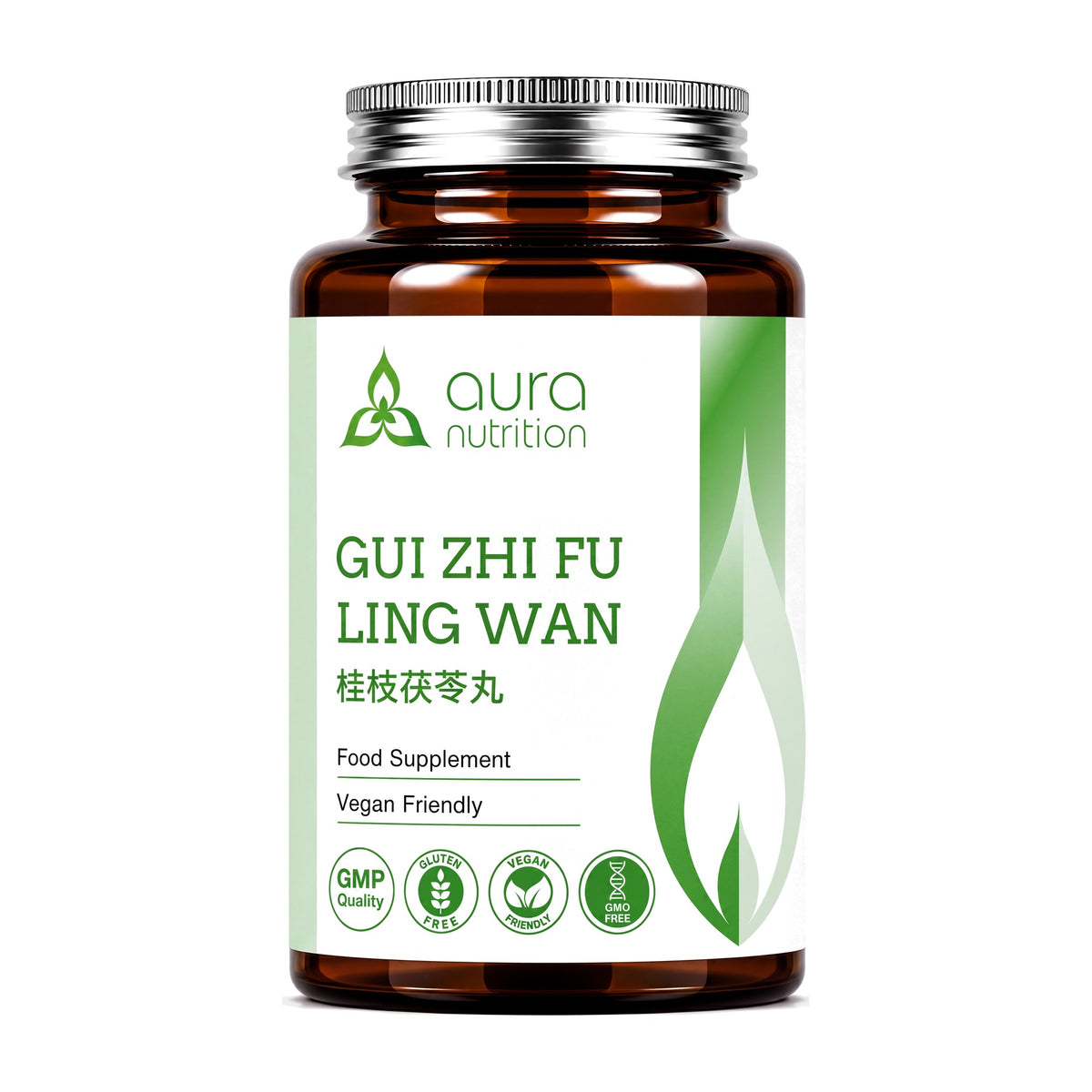
Cinnamon twig, poria, peach kernel, red peony and tree peony bark, made into 5:1 tablets. Six a day, and a bottle lasts ten days. Explore the formula
Couldn't load pickup availability
Verified Loox reviews
★★★★★
"Making a positive difference after just one bottle! Highly recommend."
Romy O. · Video review · Verified buyer★★★★★
"Extremely satisfied"
Jaqueline N. · Video review · Verified buyer★★★★★
"Not happy with the 126mg of Hydroxypropylmethylcellulose per tablet 😢 but these pills are miraculous! I’ve only taken these capsules for 12 days and can already feel and see, that my uterus has shrunk (fibroids). I am now a…"
★★★★☆
"I've been taking Gui Zhi Fu Ling Wan for about 7 weeks (3 pills, twice/day) for a large (12cm+ fibroid). I believe the minimum recommended time to take is 30 days and I'm past that. My fibroid may have reduced a little (no more…"
★★★★★
"I've been taking these for about a couple weeks now i can feel a difference I was having some stomach issues I don't feel so bloated it's just a couple of weeks so we'll see how it goes but so far very happy"
★★★★★
"Since taking this supplement I have noticed a positive change. However, it is important to highlight that it is necessary to make dietary and lifestyle changes as you are taking these supplements."
★★★★★
"Great product as per usual, its a bit too soon to differentiate the effect that they have on me as yet. I haven't been taking them long enough to say."
This one's properly old. It sits in the Jin Gui Yao Lue (the "Essentials from the Golden Cabinet", lovely title), which Zhang Zhongjing wrote around 200 AD while the Han dynasty was falling apart around him. Flip to his chapters on women's health and there it is. We can't say for certain, but it looks like one of the earliest written formulas for what Chinese medicine calls Blood stasis.
Zhang's instructions are wonderfully specific. Equal amounts of all five, ground up, stuck together with honey and rolled into pills he compares, rather unappetisingly, to rabbit droppings. One before meals. Even 1,800 years ago, it seems, herbalists liked a precise dose.
And it's never really fallen out of use. Over in Japan, Kampo doctors picked it up as Keishibukuryogan, and these days it's one of the most prescribed Kampo formulas in the country. Researchers there have taken a fair bit of interest in it too.
In Chinese medicine
Chinese medicine is big on flow. Qi gets moving and Blood trails along behind it. Let Blood slow down and pool, though, and the theory is it starts to clump into something fixed, like silt settling at a bend in a river. They call that Blood stasis, and the old texts point to the lower belly (they say "the uterus") as a favourite spot for it.
How would you know? A herbalist would be listening out for a heavy, stuck or stabbing feeling that never moves from one spot. They'd ask about periods (darker, with clots?), and they'd sneak a look at your lips and tongue for a dusky, faintly purple tinge. It's not a quick, passing thing, either. More something that's settled in over months.
Cinnamon twig warms the channels so Blood can move. Peach kernel, red peony and tree peony bark get stuck Blood going and cool any heat it's created. Poria drains Damp and steadies the Spleen. Gentle by Blood-moving standards, which is partly why it's lasted.
The Five Elements
In Chinese medicine the Liver stores the Blood and keeps it moving smoothly, and the Liver belongs to Wood. When Wood can't spread out, things stagnate. Blood included.
Spring
Wood's season, all about movement and growth. The opposite of stuck.
Liver
Said to store the Blood and release it smoothly. Two kinds of peony here look after it.
Green
Fresh growth. Cinnamon twigs, before they're dried, are young green branches.
Sour
Wood's taste. Red peony carries a hint of it, along with its bitterness.
Anger
Or frustration. Stuck feelings and stuck Blood are cousins in this system.
Traditional use
These are the ways herbalists have traditionally used it, in China and in Japanese Kampo. They're historical uses rather than health claims.
The textbook use: a fixed, heavy, stuck feeling in the lower abdomen.
Chosen when periods felt sluggish and stuck, with dark blood and clots, in Chinese medicine terms.
Herbalists looked for purplish lips or tongue as a sign that Blood was moving slowly.
In Japan it's one of the most widely used formulas in women's health clinics.
This section describes traditional use in Chinese herbal practice. Gui Zhi Fu Ling Wan is a food supplement and is not intended to diagnose, treat, cure or prevent any disease.
Inside the formula · Ingredients
Chinese formulas are arranged like a royal court, even a small one like this. Zhang used the five herbs in equal parts. Amounts are per daily serving of 6 tablets.
Chief
Cinnamon twig warms the channels and gets Blood moving. It's the 'Gui Zhi' in the name. Herb Glossary
Minister
Peach kernel is one of the classic herbs for breaking up stuck Blood. Herb Glossary
Assistants
Red peony and tree peony bark move Blood and clear heat. Poria drains Damp and supports the Spleen. Herb Glossary
Inactive ingredients: Cassava starch, Hypromellose, Magnesium stearate, Polyethylene glycol, Talc.
These are used in very small amounts to form and coat the tablets. They don't add to the formula itself.
How to take
Tablets with water.
Tablets with water.
Most people take a formula for several weeks.
Always follow the label. If you take any medication, are pregnant or breastfeeding, please speak to your GP or pharmacist before use.
Choosing between them
| Compare | Gui Zhi Fu Ling Wan | Tao Hong Si Wu Tang |
|---|---|---|
| First recorded | Han dynasty, around 200 AD | Qing dynasty, as usually cited |
| The idea | Move stuck Blood low in the abdomen | Nourish the Blood while moving it |
| Herbs | 5, including cinnamon twig and poria | 6: the Four Substances plus peach kernel and safflower |
| Character | Moving, slightly warming | Nourishing as well as moving |
| Often chosen when | The stuck feeling is fixed and heavy, low in the abdomen | Blood feels both stuck and a little depleted |
Blood stasis in the lower abdomen, to use the Chinese medicine term. Herbalists often used it around the monthly cycle when things felt stuck and heavy. It's a food supplement, so it isn't intended for any medical condition, and any new or changing symptoms should go to your GP.
No. It's a Blood-moving formula, and peach kernel, red peony and tree peony bark are all traditionally avoided in pregnancy. If you're trying to conceive or breastfeeding, please speak to your GP before taking it.
Blood thinners, mainly. If you're on warfarin, clopidogrel or daily aspirin, don't take it unless your GP's said it's OK, because several of these herbs are thought to affect blood flow. Got surgery coming up? Stop a couple of weeks beforehand, and do let your doctor know you've been taking it.
Three in the morning and three in the evening. A bottle of 60 lasts ten days.
Same formula, same five herbs, same source text. Different makers use their own methods, so the products aren't identical, but the recipe is.
It's best known as a women's formula, but Blood stasis isn't exclusive to women, and herbalists have used it for men too. Just not as often.
Related formulas
Verified Loox reviews
Food supplements should not be used as a substitute for a varied, balanced diet and a healthy lifestyle. Not intended to diagnose, treat, cure or prevent any disease. Keep out of reach of children.


