

Warmth trapped inside
The classic picture's cool hands and feet with a core that isn't cold at all.


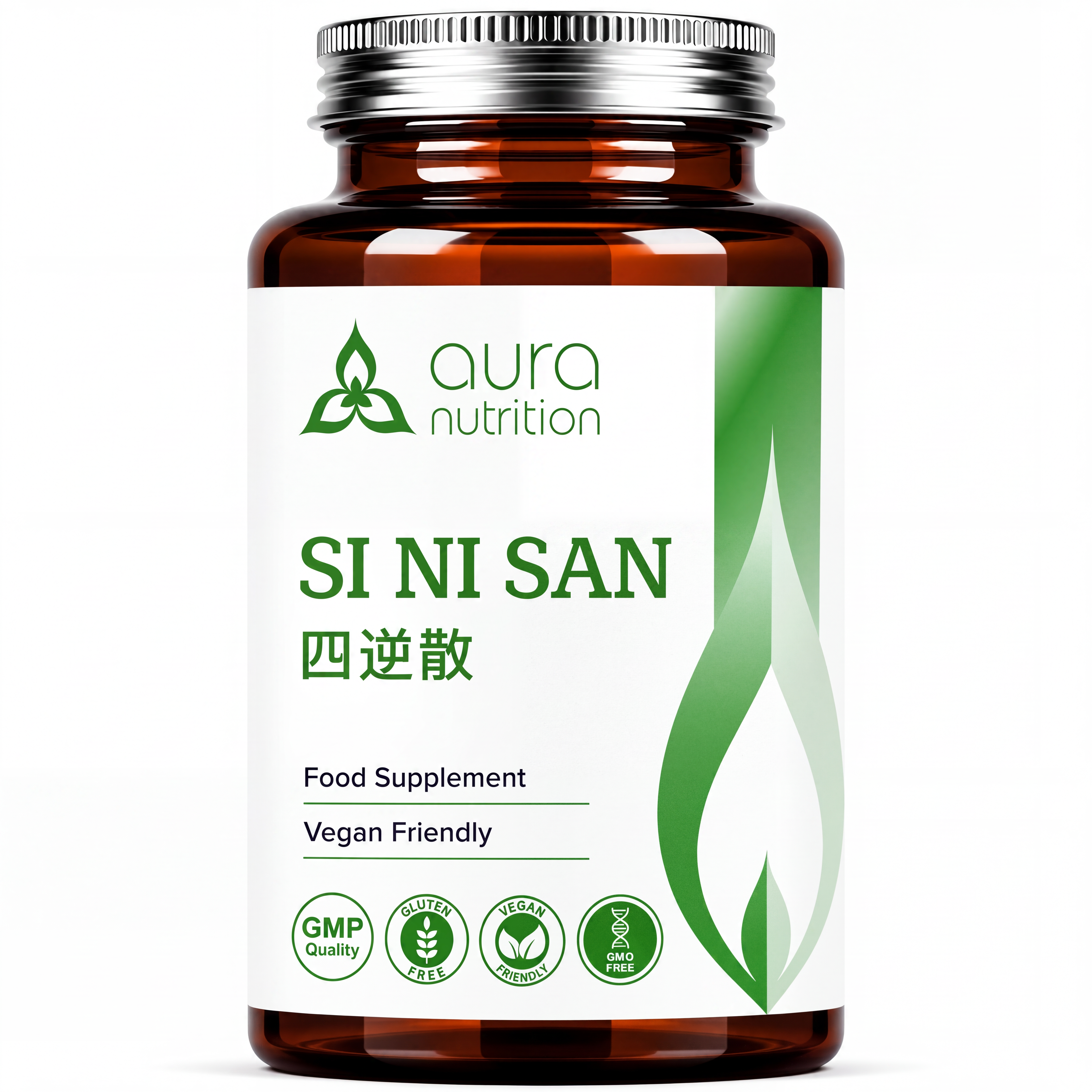
Traditional Chinese herbal formula
四逆散 · Four Reversal Powder · also known as Frigid Extremities Powder
Four herbs, equal parts, nearly two thousand years old. Si Ni San is one of Zhang Zhongjing's originals, and it's the great-grandparent of Xiao Yao San and most of the Liver formulas that came after. Herbalists used it when Qi got bottled up inside, so warmth never quite reached the hands and feet.
Bupleurum, white peony, tangerine peel and liquorice, in almost exactly equal amounts. Made into 5:1 tablets, three in the morning and three in the evening. One bottle lasts ten days. Explore the formula
Couldn't load pickup availability
Verified Loox reviews
★★★★★
"Very helpful for constipation. It took a week to see the improvement. I will be using it for the next months and hopefully it will help out with insomnia as well 🤞"
★★★★☆
"The item arrived quickly. I also like the secure & clean container with good information. Looking forward to trying out the remedy next couple of months! Thank you very much."
★★★★★
"Amazing product, I had been so ill for 8 weeks, constantly nauseous, couldn’t stomach food & had zero energy, within 2 days of taking these tablets I was full of energy & my appetite returned. I highly recommend."
★★★★☆
"Very easy order and overnight delivery. Very carefully packaged. Well presented and prepared product. Now beginning to take effect... Excellent to have such a wide range of Chinese medicines easily available."
★★★★☆
"I've been using Bu Zhong Yi Qi for just over a week, and I’m already noticing positive changes in my overall well-being. Most noticeably, it seems to be supporting my hormonal balance—I’ve felt more emotionally steady, with…"
★★★★★
"I have suffered from prolapse for years and it was better after using one bottle of this product. I am using a second bottle now and the condition is improving."
Si Ni San comes out of the Shang Han Lun, the Treatise on Cold Damage, which Zhang Zhongjing wrote around 200 AD as the Han dynasty was winding down. It gets one short line in a very long book, and scholars have been arguing about that line ever since.
The name translates as 'four counterflow powder', where the four are your limbs and 'counterflow' is the coldness creeping up your arms and legs. Just don't mix it up with Si Ni Tang, a fiery aconite formula from the same book. Same complaint, totally different cause, and that's rather the point.
Later doctors couldn't stop building on it. Chai Hu Shu Gan San, from the Ming dynasty, is basically Si Ni San plus three herbs, and Song-era Xiao Yao San shares its bupleurum and peony core. Zhang used immature bitter orange (zhi shi) in his. We use tangerine peel, its gentler citrus cousin, and keep the equal-parts balance.
In Chinese medicine
Here's the clever bit. Cold hands and feet usually mean you're short of warmth, right? Not always, said Zhang Zhongjing. Sometimes there's plenty of warm Yang Qi and it simply can't get out, so it's stuck in the middle, like leaving the heating on in a house with every door shut.
And what traps it? Stuck Liver Qi, usually, meaning tension, frustration, holding it all in. Your core stays warm (sometimes a touch too warm) while your fingers and toes go chilly, and the tummy often feels tight as well. Later doctors gave this the name Liver and Spleen disharmony.
Bupleurum's job is to lift and free the trapped Qi. White peony, its classic partner, softens the Liver and nourishes Blood. Then tangerine peel gets Qi moving through the middle and liquorice keeps the peace. Just four herbs, but beautifully balanced, in equal parts.
The Five Elements
Herbalists file the Liver under Wood, spring's element. Wood wants to spread outwards, right to your fingertips, and if you hem it in the energy just stays stuck in the trunk.
Spring
Wood's season is all about pushing outwards, which is precisely what trapped Qi isn't managing.
Liver
It's said to spread Qi round the body, and when it stalls, your hands and feet are the first to know.
Green
Wood's colour. Unripe tangerines are green before they turn, as it happens.
Sour
Wood's taste, and white peony brings the sour note that's meant to soften the Liver.
Anger
Or frustration held in, which in this formula's logic is the very thing keeping the warmth locked up.
Traditional use
This is where herbalists have reached for Si Ni San over the centuries. Please read it as tradition, not as claims about your health.
The classic picture's cool hands and feet with a core that isn't cold at all.
For when tension seems to land in the tummy and leaves a tight, uneasy feeling.
Herbalists chose it for people who bottle things up and don't let them out.
Lots of herbalists start with Si Ni San and add herbs to suit the person in front of them.
This section describes traditional use in Chinese herbal practice. Si Ni San is a food supplement and is not intended to diagnose, treat, cure or prevent any disease.
Inside the formula · Ingredients
A tiny Chinese royal court: one chief, one minister, one assistant, one envoy. All in near-equal amounts. Amounts are per daily serving of 6 tablets.
Chief
Bupleurum's there to lift and free stuck Qi so the warmth can reach your limbs. Herb Glossary
Minister
White peony softens the Liver and nourishes Blood. It's bupleurum's oldest partner, really. Herb Glossary
Assistant
Tangerine peel gets Qi moving through the middle, and it's our gentler stand-in for the original bitter orange. Dried, it smells like the bottom of a Christmas stocking, by the way. Herb Glossary
Envoy
Liquorice is the peacemaker of the bunch. Pair it with peony and, traditionally, the two are said to ease tightness. Herb Glossary
Inactive ingredients: Cassava starch, Hypromellose, Magnesium stearate, Polyethylene glycol, Talc.
These are used in very small amounts to form and coat the tablets. They don't add to the formula itself.
How to take
Tablets with water.
Tablets with water.
Most people take a formula for several weeks.
Always follow the label. If you take any medication, are pregnant or breastfeeding, please speak to your GP or pharmacist before use.
Choosing between them
| Compare | Si Ni San | Chai Hu Shu Gan San |
|---|---|---|
| First recorded | Eastern Han, around 200 AD | Ming dynasty |
| The idea | Free trapped Qi and harmonise Liver and Spleen | Move stuck Liver Qi more strongly |
| Herbs | 4, in equal parts | 7, including cyperus and Szechuan lovage |
| Character | Simple and balanced | More moving |
| Often chosen when | Cool hands and feet come with tension | Tension feels tight across the chest and sides |
Si means four, for the four limbs. Ni's the tricky one. It's 'counterflow', the old way of describing cold creeping up from your hands and feet. San is powder, although you're getting tablets from us, obviously.
Nope, and it's an easy mix-up given the names. Si Ni Tang is a hot aconite formula meant for real cold, whereas Si Ni San is for warmth that's trapped inside. One word apart, completely different idea.
Zhang Zhongjing's original had immature bitter orange in it. We use tangerine peel, a milder citrus herb that moves Qi too. Same family, gentler touch.
Three in the morning and three in the evening does it, and a bottle lasts ten days.
Not quite. There's a fair whack of liquorice in this one, so we'd steer you away if you've got high blood pressure or heart or kidney problems, or if you're on diuretics or heart medication. It's a no during pregnancy and breastfeeding as well, sorry. Anything else you take regularly? Your GP or pharmacist can tell you if it's fine to combine.
They're related. Herbalists go for Si Ni San when it's tension with cool hands and feet, and Xiao Yao San when tiredness and a need to nourish Blood come into it as well.
Related formulas
Verified Loox reviews
Food supplements should not be used as a substitute for a varied, balanced diet and a healthy lifestyle. Not intended to diagnose, treat, cure or prevent any disease. Keep out of reach of children.


