

Blood deficiency
Its bread and butter: that pale, tired, slightly dry feeling herbalists put down to not enough Blood.


Traditional Chinese herbal formula
四物汤 · Four Substances · also known as
If Chinese herbalism has a mother formula for the Blood, this is it. Si Wu Tang is four roots, nothing else, and for about a thousand years it's been the starting point whenever herbalists talked about nourishing Blood. Pale, tired, a bit washed out? That's its traditional territory.
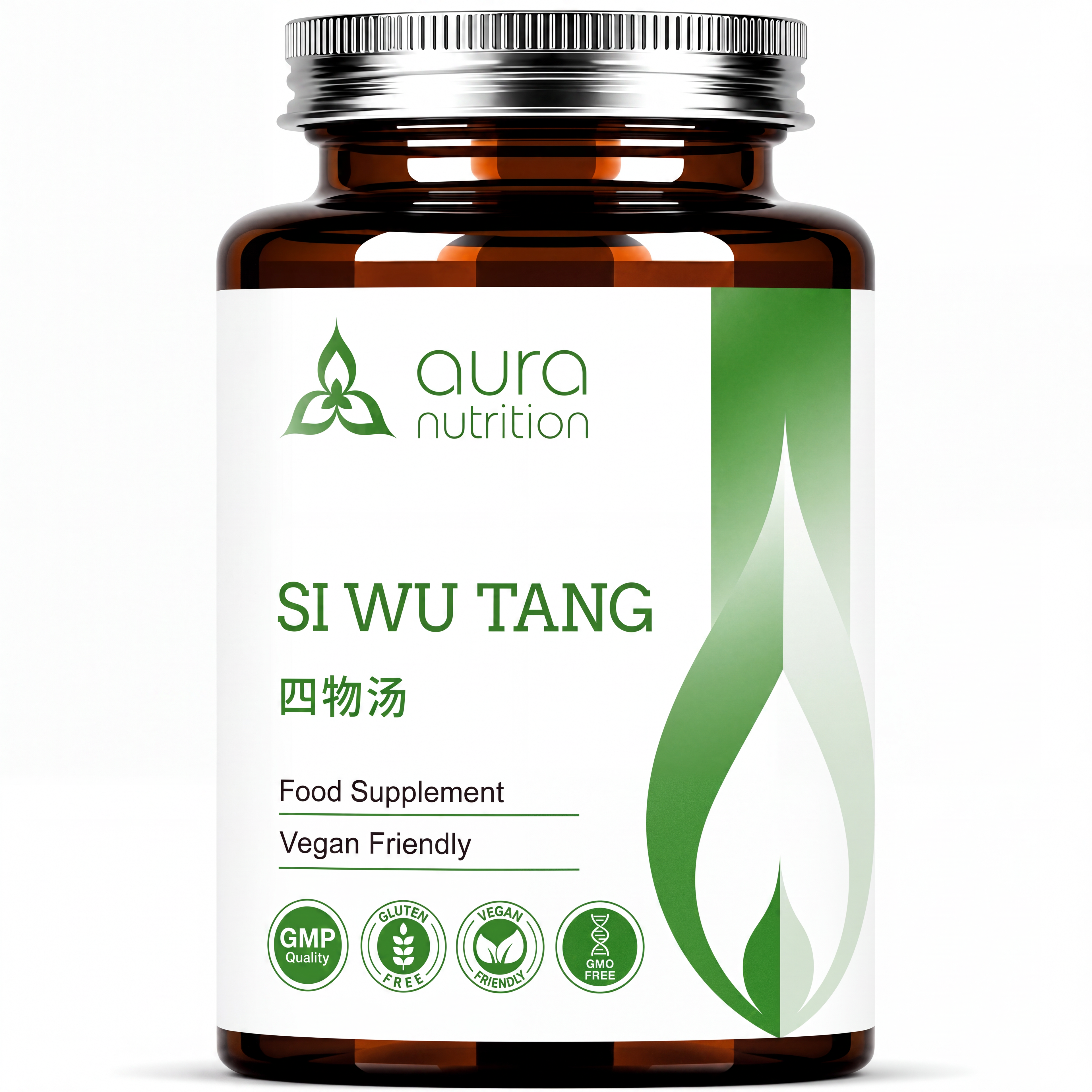
Rehmannia, white peony, dong quai and Szechuan lovage, made into 5:1 tablets. Six a day, and a bottle lasts ten days. Explore the formula
Couldn't load pickup availability
Verified Loox reviews
★★★★★
"I have been ordering these tablets for a couple of months now to improve blood flow to my uterus, reducing stagnant blood, period pain and blood clots. I am very happy with the results. One of the packages arrived damaged and the…"
★★★★★
"This has been a game-changer. Symptoms disappeared within two weeks of taking the tablets. I would highly recommend them to anyone."
★★★★★
"Absolutely brilliant product cleared up my skin and dermatitis problems in just a week! Will definitely be reordering!"
★★★★★
"Love this product, started noticing difference within 2 weeks."
Oddly enough, the earliest version we know of turns up in a Tang dynasty book on injuries and bone-setting from the 840s, credited to a Daoist monk called Lin Daoren. Not where you'd expect a famous women's formula to begin, is it? Back then it was for people mending after a knock or a break, and the monthly cycle didn't come into it at all.
Things changed in the Song dynasty, around 1110, when it was written into the He Ji Ju Fang, the government's official recipe book. Doctors started reaching for it more and more for women's health after that, and by the Ming you'd hear it called simply the formula for Blood.
It's a brilliant base, too. Throw in peach kernel and safflower and you've got Tao Hong Si Wu Tang, or pair it with the Four Gentlemen and out comes Ba Zhen Tang, the Eight Treasures. Honestly, most herbalists could scribble you a dozen more variations on the back of a napkin.
In Chinese medicine
When Chinese medicine talks about Blood, it means a bit more than the red stuff. Think of it as what feeds your skin, hair, eyes and muscles, and (this is the lovely bit) what gives the mind somewhere to settle. Run short and herbalists will tell you it's Blood deficiency.
You'd picture someone a bit pale, with dry skin and nails that snap, who goes light-headed if they stand up too quickly, and whose periods come late or scanty. Some find it hard to switch off at night as well, because, so the theory runs, the mind's got nothing to rest in.
Rehmannia and white peony are the nourishing pair, rich and pretty still, the sort of herbs that sit quietly and feed. Dong quai nourishes as well, though it also gets the Blood moving, and Szechuan lovage pushes that further. So it's not just a top-up, really. Two herbs fill the tank, two keep it going round.
The Five Elements
The Liver's said to store the Blood in Chinese medicine, and the Liver sits under Wood. Feed the Blood, the thinking goes, and the Liver's got what it needs to keep everything growing nice and smoothly.
Spring
Wood's season, and growing things need feeding, which is rather the point here.
Liver
The storehouse, they say, sending Blood out to wherever it's wanted.
Green
Wood's colour. Our tablets are brown, mind you, so don't go looking for green.
Sour
That's white peony's sourness, which herbalists reckon helps the Liver hang on to the Blood.
Anger
A Liver short of Blood gets snappy, herbalists say. Hangry, basically, but for an organ.
Traditional use
These are the places Si Wu Tang has turned up over the centuries, in the old books and in clinics now. It's tradition we're describing, so please don't read any of it as a medical claim.
Its bread and butter: that pale, tired, slightly dry feeling herbalists put down to not enough Blood.
For hundreds of years, the first base herbalists reached for when the cycle felt light, late or draining.
Often taken after spells that wipe you out, a new baby say, or a long hard stretch at work.
Plenty of herbalists start right here, then tweak it with extra herbs for whoever's in front of them.
This section describes traditional use in Chinese herbal practice. Si Wu Tang is a food supplement and is not intended to diagnose, treat, cure or prevent any disease.
Inside the formula · Ingredients
Si Wu Tang means 'four substances', and you can see why. One builds, one supports, one moves, one holds. Amounts are per daily serving of 6 tablets.
Chief
Rehmannia's the heart of it, rich and nourishing, said to replenish both Blood and Yin. Herb Glossary
Minister
Then there's dong quai, probably the most famous Blood herb going, which nourishes and keeps things flowing too. Herb Glossary
Assistant
White peony brings a gentle sour edge, nourishing the Blood and, as herbalists put it, softening the Liver. Herb Glossary
Envoy
Szechuan lovage? It moves Blood and Qi, so all that nourishment doesn't just sit about doing nothing. Herb Glossary
Inactive ingredients: Cassava starch, Hypromellose, Magnesium stearate, Polyethylene glycol, Talc.
These are used in very small amounts to form and coat the tablets. They don't add to the formula itself.
How to take
Tablets with water.
Tablets with water.
Most people take a formula for several weeks.
Always follow the label. If you take any medication, are pregnant or breastfeeding, please speak to your GP or pharmacist before use.
Choosing between them
| Compare | Si Wu Tang | Tao Hong Si Wu Tang |
|---|---|---|
| First recorded | Tang dynasty, then the Song formulary around 1110 | 1200s, named in the Qing dynasty |
| The idea | Nourish the Blood | Nourish the Blood and get it moving |
| Herbs | 4: rehmannia, dong quai, white peony, Szechuan lovage | 6: the same four plus peach kernel and safflower |
| Character | Gentle and nourishing | Nourishing with a push |
| Often chosen when | The picture is mainly pale and depleted | Depletion comes with signs of Blood stasis |
Mostly for what Chinese medicine calls Blood deficiency, so pale, tired, a bit dry, with a cycle that comes light or late. That's tradition talking, of course. Ours is a food supplement, not a medicine.
Not at all. It's famous as a women's formula, sure, but it began life in a book about injuries. Men take it as well, and herbalists will use it for anyone they think is short of Blood.
Tao Hong is Si Wu Tang with peach kernel and safflower added, and those two move the Blood fairly firmly. Plain Si Wu Tang's the gentler one, more about nourishing. Can't decide? Ask your herbalist, or just drop us a line.
You'd take three in the morning and another three in the evening, so a bottle of 60 gets you ten days.
Pregnant, trying for a baby or breastfeeding? Then have a chat with your GP first, please. Dong quai and Szechuan lovage both get the Blood moving, so don't pair it with blood thinners like warfarin, or with aspirin. And if you've got surgery booked, stop beforehand unless your doctor tells you otherwise.
Traditionally herbalists lean on the days just after a period, when they'd say the Blood needs rebuilding. Loads of people just take it all month, though, and your herbalist may well have an opinion.
Related formulas
Verified Loox reviews
Food supplements should not be used as a substitute for a varied, balanced diet and a healthy lifestyle. Not intended to diagnose, treat, cure or prevent any disease. Keep out of reach of children.


