

Running on empty
The classic pick when both Qi and Blood are said to be low and everything feels like an effort.


Traditional Chinese herbal formula
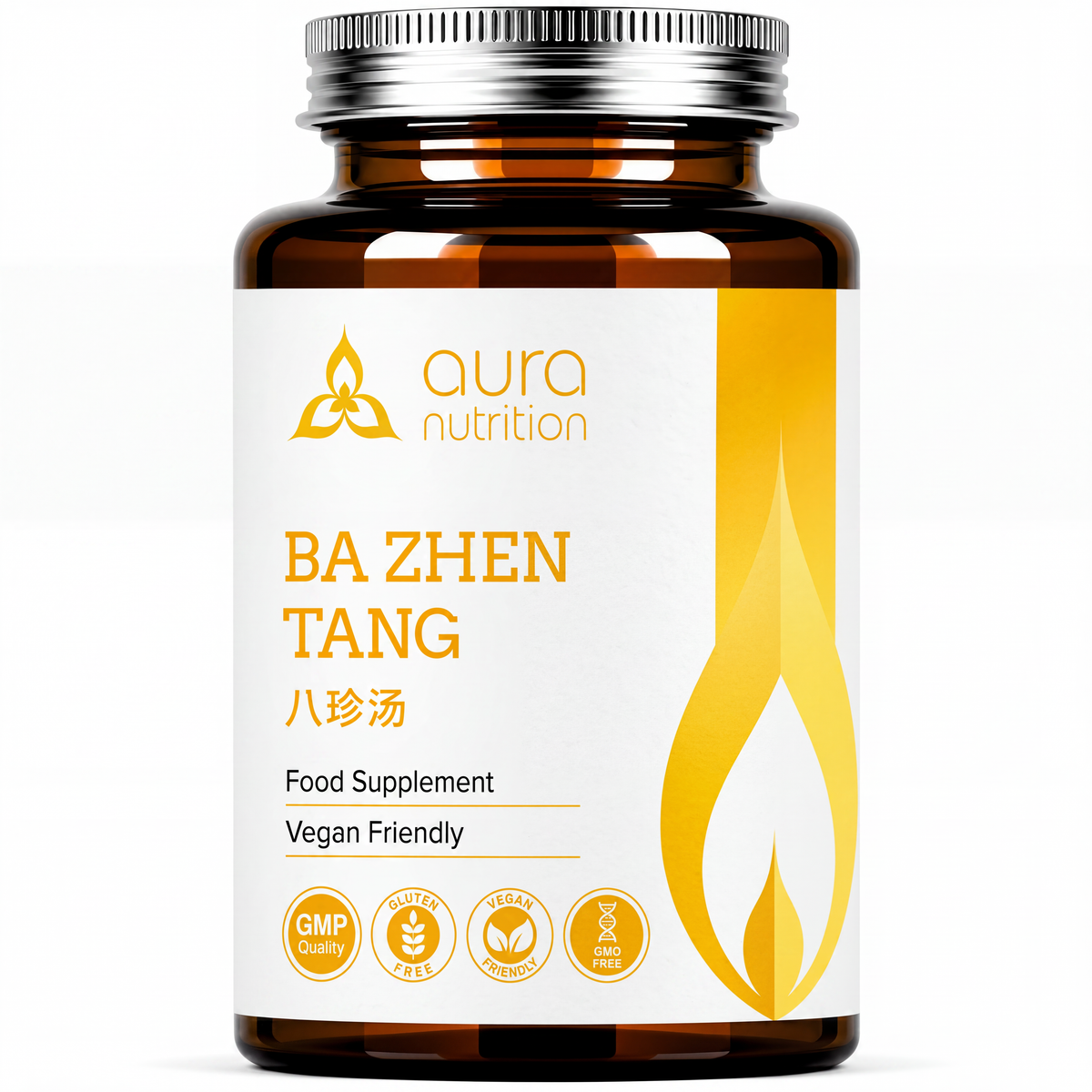
八珍汤 · Eight Treasures Decoction · also known as Ba Zhen Wan
Ba Zhen Tang is two famous formulas in one. Take the Four Gentlemen, the classic for Qi, add the Four Substances, the classic for Blood, and you've got eight treasures. Herbalists reached for it when someone was simply depleted, top to bottom.
Eight herbs, led by prepared rehmannia, dong quai, ginseng and white atractylodes. Made into 5:1 tablets. Six a day, and a bottle lasts ten days. Explore the formula
Couldn't load pickup availability
Verified Loox reviews
★★★★★
"Ba Zhen Tang was recommended by a doctor who specialises in Chinese medicine when I had been diagnosed with chronic fatigue (M.E.). Slowly but surely this product lifted me from this condition and I went back to it after a bout…"
★★★★★
"I’m loving this so far. Have seen improvements in my menstrual cycle. Feel happier and less hormonal and much calmer."
★★★★★
"Feel more energized and focused , using it as part of my exercise routine"
★★★★★
"Ba Zhen Tang has helped me get over chronic fatigue."
★★★★★
"A very good product"
Both halves of Ba Zhen Tang were already famous on their own. Si Jun Zi Tang (Four Gentlemen) and Si Wu Tang (Four Substances) were each in the Song dynasty's official recipe book, the He Ji Ju Fang, by around 1110. One for Qi, one for Blood.
The same Song book already had a bigger tonic, Shi Quan Da Bu Tang, with all eight inside it. The eight on their own, under the Ba Zhen name, turn up in the Yuan dynasty, and the Ming physician Xue Ji used it widely in the 1500s, which helped make Ba Zhen Tang the name everyone knows. The 'tang' means decoction, a pot of herbs simmered in water.
Why 'treasures'? Each herb was thought precious in its own right. Eight of them in one pot was a bit of a luxury. These days it's one of the most used tonic formulas going, and its close cousin Shi Quan Da Bu Tang (Ten Great Tonics) is still the one to know for when the cold creeps in too.
In Chinese medicine
Qi and Blood are a double act in Chinese medicine (we tend to picture an old married couple who finish each other's sentences). Qi does the moving about, Blood's what gets carried, the nourishing stuff. And if one of them's running on empty for long enough, you can bet the other's not far behind.
The old picture of Qi and Blood deficiency won't surprise you much. Tired. Pale. Out of puff halfway up the stairs, and a bit swimmy-headed if you get up off the sofa too fast. Herbalists tended to see it after a long illness, or a rotten few months, or a new baby (which, frankly, covers most of the above). Basically, worn out.
Ginseng, white atractylodes, poria and liquorice are the Four Gentlemen, looking after the Spleen so you make Qi in the first place. Rehmannia, dong quai, white peony and Sichuan lovage are the Four Substances, nourishing the Blood. Simple, really. That's the elegance of it.
The Five Elements
Herbalists put the Spleen under Earth, the element of late summer. In Chinese medicine the Spleen turns food into Qi and Blood, so it's where any rebuilding has to begin.
Late summer
The ripe, heavy end of summer, when the harvest comes in.
Spleen
Paired with the Stomach, and seen as the source of both Qi and Blood.
Yellow
The colour of earth and grain. Cut an atractylodes root open and it's a sort of creamy yellow inside, funnily enough.
Sweet
Earth's taste is sweet, the mild kind. You'd get it chewing a bit of liquorice root, and ginseng and prepared rehmannia have a touch of it too.
Worry
Or overthinking. Herbalists say too much of it wears out the Spleen, which might ring a bell.
Traditional use
These are the ways Ba Zhen Tang has traditionally been used. History and practice, we should say, rather than medical claims.
The classic pick when both Qi and Blood are said to be low and everything feels like an effort.
Herbalists often turned to it after a long illness, an operation or a draining few months.
Lots of Chinese families reach for it in the months after a baby arrives. Not while you're still breastfeeding, mind, unless a practitioner's said it's fine.
Pale face, pale lips, and the sense you've been put through the wash on a hot cycle. That's the textbook picture.
This section describes traditional use in Chinese herbal practice. Ba Zhen Tang is a food supplement and is not intended to diagnose, treat, cure or prevent any disease.
Inside the formula · Ingredients
Ba Zhen Tang is really two four-herb formulas joined up, so here's how the court lines up. Amounts are per daily serving of 6 tablets.
Chiefs
Prepared rehmannia leads the Blood side and ginseng leads the Qi side. Two chiefs for two jobs. Herb Glossary
Ministers
Dong quai and white peony are the Blood side of things, both there to nourish it, and white atractylodes is the one helping the Spleen make Qi. Herb Glossary
Assistants
Poria drains damp so the Spleen isn't bogged down. Sichuan lovage keeps the Blood moving, so all that nourishment doesn't just sit there. Herb Glossary
Envoy
Liquorice warms the middle and brings the two teams together. Herb Glossary
Inactive ingredients: Cassava starch, Hypromellose, Magnesium stearate, Polyethylene glycol, Talc.
These are used in very small amounts to form and coat the tablets. They don't add to the formula itself.
How to take
Tablets with water.
Tablets with water.
Most people take a formula for several weeks.
Always follow the label. If you take any medication, are pregnant or breastfeeding, please speak to your GP or pharmacist before use.
Choosing between them
| Compare | Ba Zhen Tang | Shi Quan Da Bu Tang |
|---|---|---|
| First recorded | Yuan to Ming dynasty, built from two Song formulas | Song dynasty, He Ji Ju Fang |
| The idea | Nourish Qi and Blood together | Nourish Qi and Blood, and add warmth |
| Herbs | 8: the Four Gentlemen plus the Four Substances | 12, adding astragalus, cinnamon, ginger and jujube |
| Character | Balanced, neither warm nor cool | Noticeably warmer |
| Often chosen when | You're worn out and pale | You're worn out and feel the cold too |
It's eight herbs, and each one's considered precious in its own right. 'Ba' means eight and 'zhen' is a treasure, or something rare, so you end up with 'eight treasures'. Simple, really.
Just the form. 'Tang' is a decoction, 'wan' means pills. Same eight herbs. Ours are concentrated tablets, which saves you a lot of simmering.
Three tablets in the morning, three in the evening. That's six a day, so a bottle of 60 sees you through ten days.
If you're expecting, breastfeeding or on medication of any kind, we'd really like you to run it past your GP first. And keep it away from blood thinners like warfarin, because of the dong quai. Liquorice can nudge blood pressure up in some people, and ginseng doesn't always get on with diabetes medication either. It's quite a rich formula too, so herbalists usually hold off while you've got a cold or an upset tummy.
If you run warm, or you're fine temperature-wise, Ba Zhen Tang. Tired and always cold, though? Herbalists often reach for Ten Great Tonics instead, which adds astragalus and some warming cinnamon.
Either's fine, honestly. Got a sensitive stomach? Then with meals is usually easier, since rehmannia can sit a bit heavy on an empty tummy.
Related formulas
Verified Loox reviews
Food supplements should not be used as a substitute for a varied, balanced diet and a healthy lifestyle. Not intended to diagnose, treat, cure or prevent any disease. Keep out of reach of children.


