

Yin deficiency with heat
The textbook use: Kidney Yin running low, with 'empty heat' flaring up as a result.


Traditional Chinese herbal formula
知柏地黄丸 · Anemarrhena, Phellodendron & Rehmannia · also known as Zhi Bai Ba Wei Wan
Take Liu Wei Di Huang Wan, the classic Kidney Yin formula, and add two cooling herbs. That's Zhi Bai Di Huang Wan. Herbalists used it when the dryness of Yin deficiency came with real heat on top: warm at night, flushed in the evening, a hot, dry, slightly wired feeling that just won't cool off.
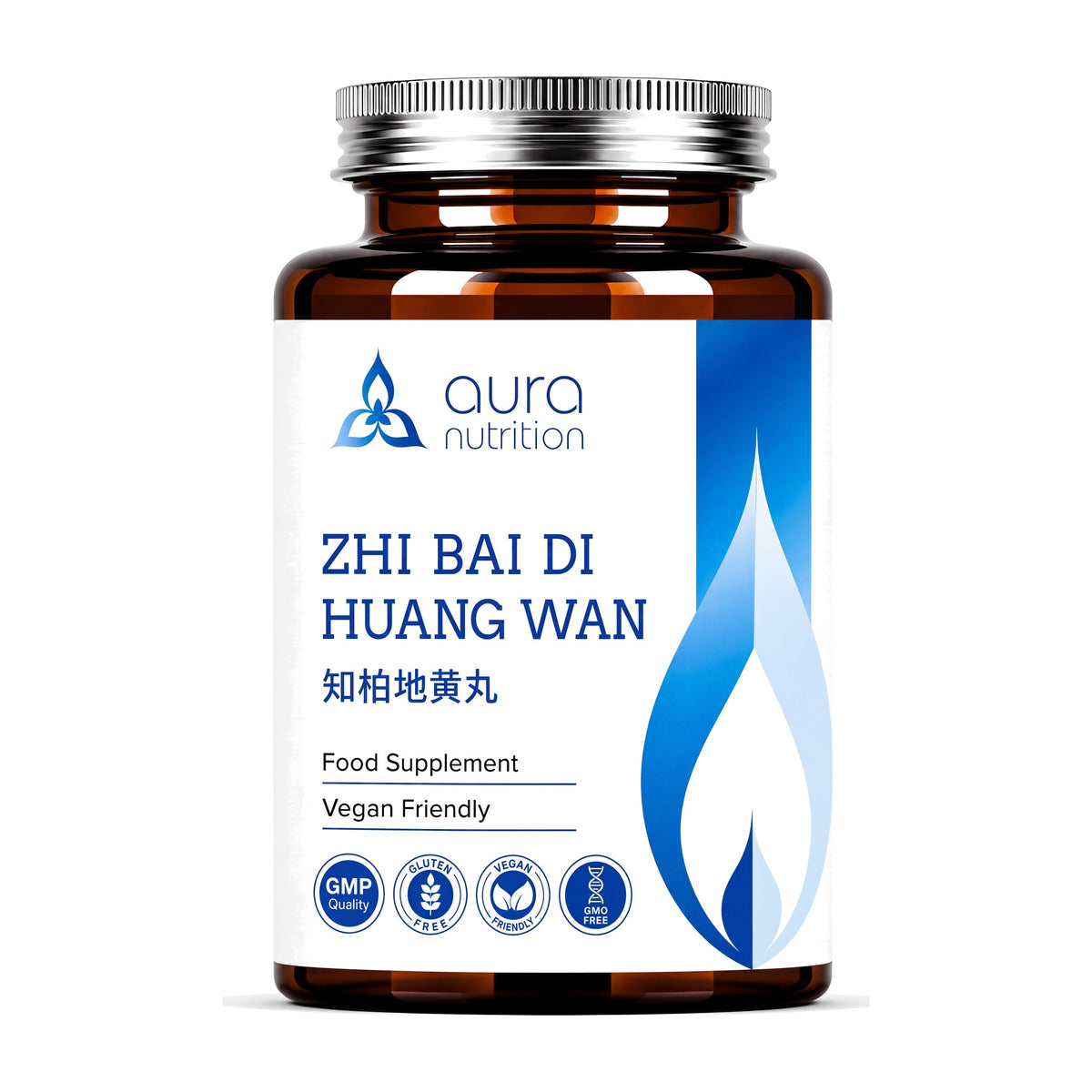
Eight herbs, led by rehmannia, with anemarrhena and phellodendron doing the cooling. Made into 5:1 tablets. Six a day, and a bottle lasts ten days. Explore the formula
Couldn't load pickup availability
Verified Loox reviews
★★★★★
"I bought this to help with chronic Yin deficiency symptoms, including persistent urinary tract irritation, dragging fatigue, and poor sleep. Since starting these tablets, I’ve felt a noticeable improvement—my kidney energy feels…"
★★★★★
"The Bi Yan Pian after 6 weeks of use has made a remarkable improvement to my morning coughing fits from Rhinitis so much less mucous on my lungs and nose clearer. It has not completely cured it yet, lets see what happens after…"
★★★★★
"Having got through a very nasty UTI and still not cleared with antibiotics these tablets have helped to settle everything down and I will not be without then should this problem tecur"
★★★★★
"Great product, feeling good using it and blood pressure is under control."
★★★★☆
"These two medicines together have helped me to ease some side effects of other medications I have to take for arthritis."
★★★★★
"Great for reducing hot flashes and night sweats"
★★★★★
"Great product and good value for money."
★★★★★
"I enjoy your natural supplements"
The base is Liu Wei Di Huang Wan, first published in 1119 by followers of the Song dynasty children's doctor Qian Yi. Six herbs. Three to nourish, three to drain. It became the classic formula for Kidney Yin.
The two additions have their own backstory. In the Yuan dynasty, the physician Zhu Danxi argued that most people run short of Yin rather than Yang, and that the gap lets a kind of 'empty' fire flare up. His favourite pair for calming it was anemarrhena (Zhi Mu) and phellodendron (Huang Bo, also written Huang Bai).
Later doctors put the two ideas together. Ming physicians were already adding the pair to Liu Wei, and the name we use now, Zhi Bai Di Huang Wan, was fixed in the Qing dynasty's Golden Mirror of Medicine (Yi Zong Jin Jian), published in 1742.
In Chinese medicine
You could call Yin the body's coolant, if you like, the moistening, calming side of things. Kidney Yin is the deepest store of it, and age, overwork and late nights are all said to wear it down, so you end up drying out a bit. That's Liu Wei territory.
Sometimes, though, it's more than a case of less coolant. With too little Yin to keep it in check, Yang starts flaring up as what the old books call 'empty heat', and herbalists then talk about warm flushes in the afternoon or evening, hot palms and soles, sweating at night, a dry throat and a red tongue with hardly any coating. Its full title? Yin deficiency with Fire blazing. Bit dramatic, but you get the idea.
So the formula's got two jobs. Rehmannia leads the six Liu Wei herbs in nourishing Kidney Yin, while anemarrhena and phellodendron, both bitter and cold (phellodendron bark is a startling bright yellow inside), deal with the heat. Top up the coolant and turn down the flame. Fair enough.
The Five Elements
The Kidneys belong to Water, the element that's meant to keep Fire in check. When Water runs low, Fire gets the upper hand. This formula is about restoring that balance.
Winter
Water's season, for storing and conserving. Very much the opposite of burning the candle at both ends.
Kidney
Said to hold the body's deepest Yin. Rehmannia and cornus are here to nourish it.
Black
Deep water, dark and still. The kind of calm this formula is aiming for.
Salty
Water's taste. Old pharmacists sometimes processed phellodendron with salt water to guide it to the Kidneys.
Fear
Water's emotion. Restless, anxious nights are part of the old descriptions of Yin running low.
Traditional use
Here's how herbalists have traditionally used it. It's a record of tradition, not a promise of any health effect.
The textbook use: Kidney Yin running low, with 'empty heat' flaring up as a result.
Chosen when warmth crept in each afternoon or evening, with hot palms and soles.
Popular with women heading into the change, when Chinese medicine sees Yin starting to wane.
Herbalists picked it over plain Liu Wei when dryness came with real heat and a red tongue.
This section describes traditional use in Chinese herbal practice. Zhi Bai Di Huang Wan is a food supplement and is not intended to diagnose, treat, cure or prevent any disease.
Inside the formula · Ingredients
Chinese formulas are built like a royal court. Here the six Liu Wei herbs nourish, and two cooling herbs join them. Amounts are per daily serving of 6 tablets.
Chief
Rehmannia nourishes Kidney Yin and Essence. It's the backbone of the whole formula. Herb Glossary
Ministers
Anemarrhena and phellodendron are cold and bitter, the classic pair for clearing empty heat. Cornus and Chinese yam back up the nourishing side. Herb Glossary
Assistants
Liu Wei's three 'drainers'. Alisma, tree peony bark and poria stop all that nourishing from getting heavy, and tree peony bark helps cool too. Herb Glossary
Inactive ingredients: Cassava starch, Hypromellose, Magnesium stearate, Polyethylene glycol, Talc.
These are used in very small amounts to form and coat the tablets. They don't add to the formula itself.
How to take
Tablets with water.
Tablets with water.
Most people take a formula for several weeks.
Always follow the label. If you take any medication, are pregnant or breastfeeding, please speak to your GP or pharmacist before use.
Choosing between them
| Compare | Zhi Bai Di Huang Wan | Liu Wei Di Huang Wan |
|---|---|---|
| First recorded | Ming and Qing dynasties | Song dynasty, 1119 |
| The idea | Nourish Kidney Yin and clear empty heat | Nourish Kidney Yin, gently and evenly |
| Herbs | 8: the classic six plus anemarrhena and phellodendron | 6, the original family recipe |
| Character | Noticeably cool | Balanced, very slightly cool |
| Often chosen when | Dryness comes with obvious heat, especially in the evening | Things feel dry and depleted without much heat |
Kidney Yin deficiency with empty heat, in Chinese medicine terms. Think dry and depleted, but also warm and flushed, especially later in the day. It's a food supplement and isn't intended for any medical condition.
Two extra herbs, anemarrhena and phellodendron, which make it noticeably cooler. Herbalists choose it when there's clear heat. For dryness and tiredness without much heat, plain Liu Wei is usually the pick.
Three in the morning and three in the evening. A bottle of 60 lasts ten days.
If you're pregnant, breastfeeding or on regular medication, check with your GP before you start, please. Tree peony bark is traditionally used with care in pregnancy. It's also a cold formula, so herbalists wouldn't suggest it if you're always chilly or your digestion's weak and easily upset.
It's short for the two added herbs: Zhi from Zhi Mu (anemarrhena) and Bai from Huang Bai (phellodendron, also spelt Huang Bo). Di Huang is rehmannia, and Wan means pill.
Most herbalists see it as one for a particular phase, while the heat's obvious. When things have cooled down, plenty of people move over to plain Liu Wei Di Huang Wan instead. If you're not sure where you are with it, a qualified practitioner can help you decide.
Related formulas
Verified Loox reviews
Food supplements should not be used as a substitute for a varied, balanced diet and a healthy lifestyle. Not intended to diagnose, treat, cure or prevent any disease. Keep out of reach of children.


