

Tight sinews
The original use from the Shang Han Lun: legs that feel pulled tight and won't relax.


Traditional Chinese herbal formula
芍药甘草汤 · Peony & Liquorice · also known as Shakuyakukanzoto
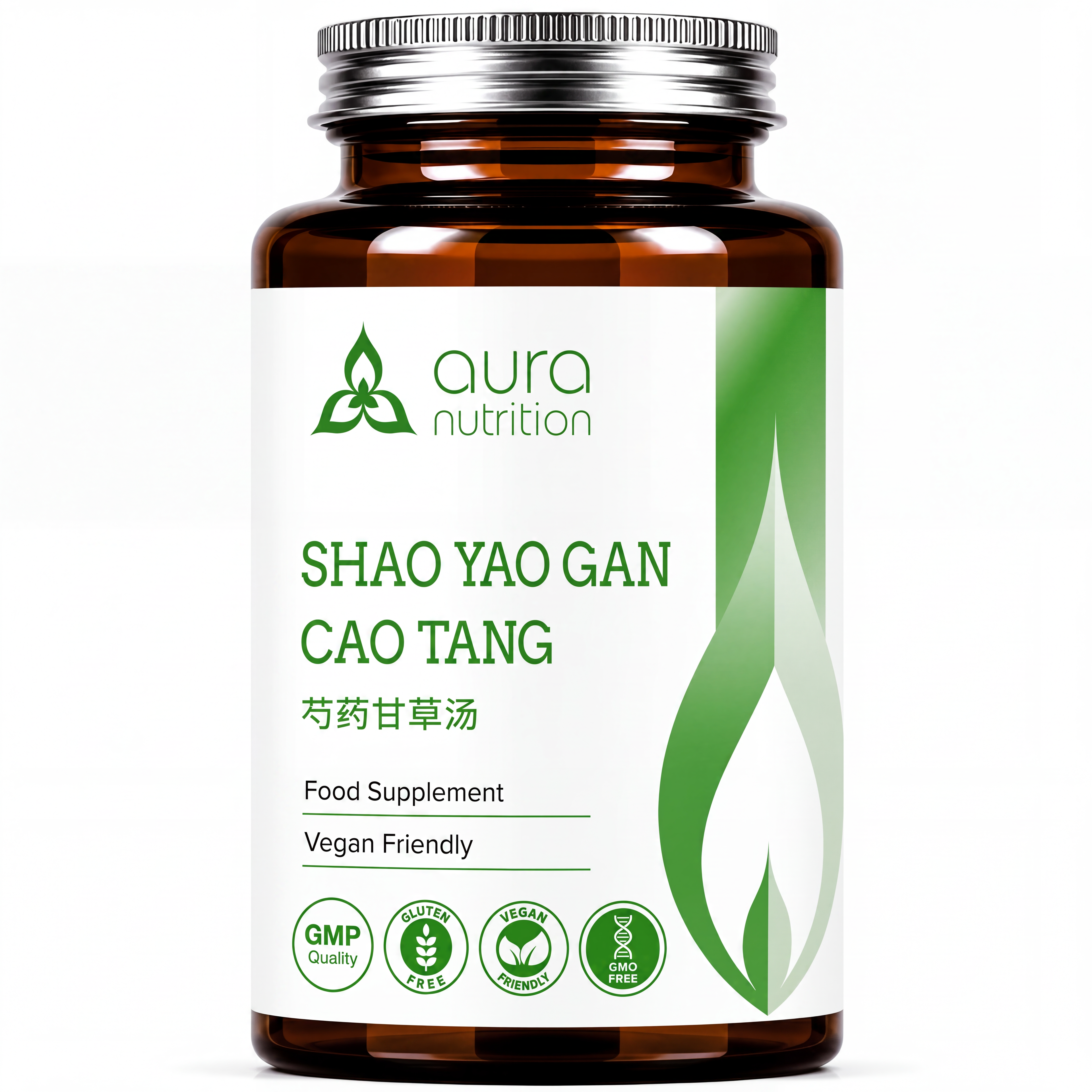
Two herbs. That's it. Shao Yao Gan Cao Tang is white peony root and liquorice, and it's been in the herbalist's kit for about 1,800 years. In Chinese medicine terms it's the classic for sinews that feel tight and tugging, the kind of tension that seems to grip rather than ache.
Plenty of white peony with a smaller share of liquorice, made into 5:1 tablets. Six a day, and a bottle lasts ten days. Explore the formula
Couldn't load pickup availability
Verified Loox reviews
★★★★★
"Great quality. Fast delivery."
Naim D. · Video review · Verified buyer★★★★★
"Always go to a qualified Chinese Herbalist/Acupuncturist as they understand how to use this powerful model of health management."
★★★★★
"Love these. Great quality product."
This one comes from the Shang Han Lun, the Treatise on Cold Damage, written by Zhang Zhongjing around 200 AD at the end of the Han dynasty. It's probably the most studied herbal text in China. Students still learn it line by line.
The formula turns up in a little case story. A patient is given the wrong formula, sweats too much and ends up with legs so tight he can't stretch them out. Zhang first warms him back up with another recipe, then gives peony and liquorice. The text says simply that his legs straighten. Lovely bit of writing, really.
Later doctors gave it a nickname, Qu Zhang Tang, roughly 'throw away the walking stick'. In Japan it's Shakuyakukanzoto, and it's one of the most used Kampo formulas there.
In Chinese medicine
Chinese medicine hands the Liver responsibility for the sinews, meaning the tendons and muscles you move with. It keeps them soft and supple by sending them Blood and Yin, and if those run low, the theory goes, the sinews dry out and tighten. Picture a leather strap that's been left out in the sun all summer.
So the picture here is tension that grips and pulls, in the legs or the belly. The old books describe it as Liver Blood and Yin failing to nourish the sinews. Short, sharp and tight, rather than dull and heavy.
White peony is sour and liquorice is sweet. Put sour and sweet together, the classical idea says, and they 'transform Yin', making something moistening that softens the sinews. One herb steadies the Liver, the other calms the urgency. Simple pairing, big reputation.
The Five Elements
The Liver belongs to Wood, and Wood rules the sinews. Healthy Wood bends in the wind. Dry Wood snaps. That's the whole idea behind this formula in a sentence.
Spring
Wood's season, all fresh growth and stretching upwards.
Liver
Said to store the Blood and send it out to the sinews so they stay supple.
Green
Young bamboo, new branches. Things that bend rather than break.
Sour
White peony brings the sour note here, and there's a lot of it in this formula.
Anger
Wood's emotion. Tension in the mood and tension in the body are close cousins in this system.
Traditional use
These are the ways it's been used in Chinese and Japanese herbal practice. Tradition, in other words, rather than any claim about what it does for you.
The original use from the Shang Han Lun: legs that feel pulled tight and won't relax.
Herbalists also chose it when tension seemed to gather in the middle and clench.
In Kampo it's long been a go-to for the tight, gripping feeling some women get around their period.
Practitioners often pair it with other formulas to add a softening, Yin-nourishing edge.
This section describes traditional use in Chinese herbal practice. Shao Yao Gan Cao Tang is a food supplement and is not intended to diagnose, treat, cure or prevent any disease.
Inside the formula · Ingredients
With only two herbs there's not much of a royal court here. Peony leads and liquorice backs it up. Amounts are per daily serving of 6 tablets.
Chief
White peony is sour and cooling. It's said to nourish Liver Blood and Yin and soften the sinews. Herb Glossary
Minister
Liquorice is sweet. With peony it 'transforms Yin', and on its own it's said to ease urgency. Herb Glossary
Inactive ingredients: Cassava starch, Hypromellose, Magnesium stearate, Polyethylene glycol, Talc.
These are used in very small amounts to form and coat the tablets. They don't add to the formula itself.
How to take
Tablets with water.
Tablets with water.
Most people take a formula for several weeks.
Always follow the label. If you take any medication, are pregnant or breastfeeding, please speak to your GP or pharmacist before use.
Choosing between them
| Compare | Shao Yao Gan Cao Tang | Gui Zhi Tang |
|---|---|---|
| First recorded | Shang Han Lun, around 200 AD | Shang Han Lun, around 200 AD |
| The idea | Nourish Yin and soften the sinews | Warm the surface and balance the body's defences |
| Herbs | 2: white peony and liquorice | 5: the same two, plus cinnamon twig, ginger and jujube |
| Character | Cool and softening | Gently warming |
| Often chosen when | Tightness and tension are the main thing | Someone feels chilly, a bit sweaty and out of sorts |
Because that's the recipe. Zhang Zhongjing wrote plenty of short formulas, and this is one of the shortest. The peony and liquorice pairing turns up inside lots of bigger formulas too.
Shao Yao is peony, Gan Cao is liquorice and Tang means decoction, a herbal tea. It just tells you what's in the pot. Ours is a concentrated tablet, mind, not a tea.
Three in the morning and three in the evening. One bottle of 60 lasts ten days.
Yes, and there's a fair bit of it in here. Over long spells liquorice can push your blood pressure up, drop your potassium and make you hold on to fluid. So if you've got high blood pressure, a heart or kidney condition, or you're on water tablets, steroids or heart medicines like digoxin, please talk to your GP before you start. Pregnant or breastfeeding? Same again, since big amounts of liquorice are best avoided then.
Traditionally it's used for shorter spells rather than month after month, partly because of the liquorice. If you'd like to take it longer, have a word with a qualified herbalist.
Same two herbs, same source text. Kampo makers use their own preparation methods and ratios, so the products aren't identical, but it's the same formula.
Related formulas
Verified Loox reviews
Food supplements should not be used as a substitute for a varied, balanced diet and a healthy lifestyle. Not intended to diagnose, treat, cure or prevent any disease. Keep out of reach of children.


