

Heat in the lower body
The core idea's Heat that's settled low down, with a heavy, uncomfortable feeling to it.


Traditional Japanese Kampo formula
乙字汤 · Otsuji's Formula · also known as Otsujito
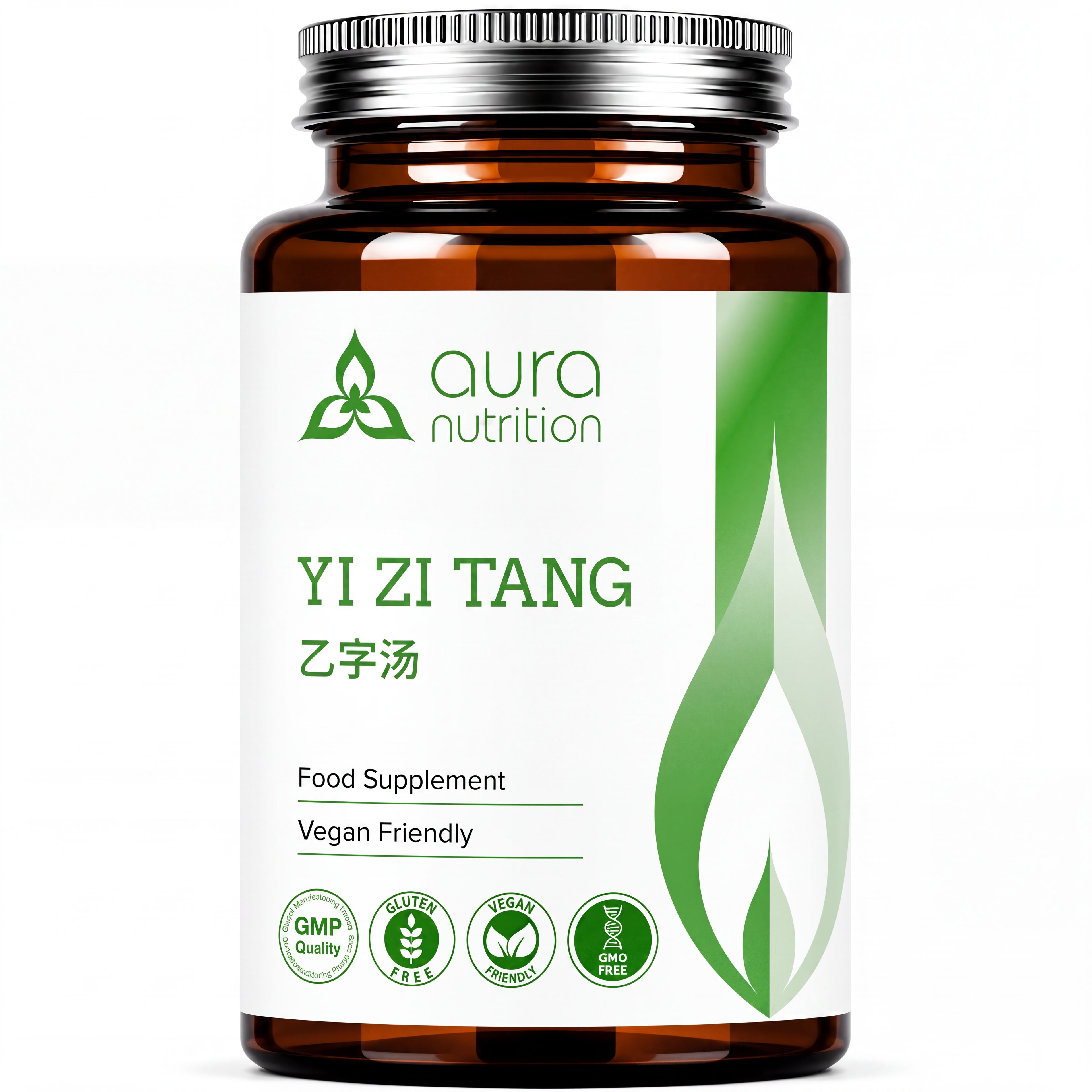
The odd one out in our range: Yi Zi Tang was created in Japan, not China. It's a Kampo formula from the Edo period, built from Chinese herbs, and herbalists used it for Heat and a heavy, dragging feeling in the lower body.
Five herbs, led by a big dose of bupleurum, with dong quai, Baikal skullcap, liquorice and a little rhubarb root. Made into 5:1 tablets. Six a day, so a bottle lasts ten days. Explore the formula
Couldn't load pickup availability
Verified Loox reviews
★★★★★
"Amazing product, I had been so ill for 8 weeks, constantly nauseous, couldn’t stomach food & had zero energy, within 2 days of taking these tablets I was full of energy & my appetite returned. I highly recommend."
★★★★☆
"Very easy order and overnight delivery. Very carefully packaged. Well presented and prepared product. Now beginning to take effect... Excellent to have such a wide range of Chinese medicines easily available."
★★★★☆
"I've been using Bu Zhong Yi Qi for just over a week, and I’m already noticing positive changes in my overall well-being. Most noticeably, it seems to be supporting my hormonal balance—I’ve felt more emotionally steady, with…"
★★★★★
"I have suffered from prolapse for years and it was better after using one bottle of this product. I am using a second bottle now and the condition is improving."
★★★★★
"Have been recommended to help me restore my sleep and it has been really useful."
★★★★☆
"I take 3 pills in the morning and 3 in the evening and is have improved my sleep 😴"
Yi Zi Tang is just the Chinese reading of Otsujito, a formula worked out by Hara Nanyo, a physician in Edo-period Japan who lived from 1752 to 1820. By then Japanese doctors had been studying Chinese medicine for centuries and had grown their own version of it, Kampo, and this is one of Kampo's home-grown classics.
Despite the English 'Otsuji's Formula' (we use it too, so no judgement), the name's got nothing to do with a person. Otsu (乙) is the second of the ten Heavenly Stems, an old Chinese counting system a bit like A, B, C, and Hara Nanyo labelled some of his formulas that way. So it's 'Formula B', more or less. Bit of an anticlimax, isn't it?
He built it for complaints of the lower body, with haemorrhoids top of the list in the Kampo books of the day. Later Japanese doctors tweaked it, and today's standard Kampo version includes cimicifuga as well. Ours is a five-herb version without it, and bupleurum's very firmly in charge.
In Chinese medicine
The thinking is that two things are happening low down at once. Heat's built up, and Qi, which ought to be holding things up and in place, has started to sag. Hot and heavy, if you like. Kampo doctors saw it a lot in people who sat about for long hours.
So the formula pulls two ways at the same time. Bupleurum, at a big dose, is the classic lifting herb, said to raise sinking Qi, while Baikal skullcap and rhubarb root clear Heat and move things downwards and out. Sounds contradictory, doesn't it? A herbalist would just call it balance.
Dong quai nourishes and moves Blood, because wherever there's Heat and sluggishness, Blood's thought to pool. Liquorice, at a fair dose, keeps everything in harmony and softens the sharper herbs. Only five herbs in all, which is very Japanese in its economy.
The Five Elements
Bupleurum, the chief herb here, belongs to the Liver, and the Liver belongs to Wood, the element of spring and of growing upwards. That upward push is exactly why bupleurum's in the formula.
Spring
Wood's season, when everything rises, and bupleurum's the herb of rising.
Liver
The Liver channel runs through the lower body, which is just where this formula focuses.
Green
Wood's colour. Before the root's dug up, bupleurum is a feathery green plant with little yellow flowers.
Sour
That's Wood's taste, though this formula leans bitter instead, thanks to the skullcap and rhubarb.
Anger
Wood's emotion, and herbalists say frustration that's bottled up can turn into Heat.
Traditional use
This is how Kampo and Chinese herbalists have traditionally used it. It's traditional practice, so please don't read it as a medical claim.
The core idea's Heat that's settled low down, with a heavy, uncomfortable feeling to it.
Picked when things feel like they're dragging down, not holding up.
Kampo doctors linked the pattern with desk-bound, sit-down lives.
In Kampo terms, it's chosen when slowness and warmth turn up together.
This section describes traditional use in Chinese herbal practice. Yi Zi Tang is a food supplement and is not intended to diagnose, treat, cure or prevent any disease.
Inside the formula · Ingredients
Kampo formulas follow the same royal court idea as Chinese ones: a chief, ministers, an assistant and an envoy. Amounts are per daily serving of 6 tablets.
Chief
Bupleurum's the biggest amount by a long way, and herbalists use it to lift sinking Qi and ease the Liver. Herb Glossary
Ministers
Baikal skullcap, a bright yellow root once it's sliced, clears Heat, and dong quai nourishes and moves Blood. Herb Glossary
Assistant
A small amount of rhubarb root clears Heat and moves things downwards. Herb Glossary
Envoy
Liquorice keeps things in harmony and takes the edge off all the bitter herbs. Herb Glossary
Inactive ingredients: Cassava starch, Hypromellose, Magnesium stearate, Polyethylene glycol, Talc.
These are used in very small amounts to form and coat the tablets. They don't add to the formula itself.
How to take
Tablets with water.
Tablets with water.
Most people take a formula for several weeks.
Always follow the label. If you take any medication, are pregnant or breastfeeding, please speak to your GP or pharmacist before use.
Choosing between them
| Compare | Yi Zi Tang | Xiao Chai Hu Tang |
|---|---|---|
| First recorded | Edo Japan, around 1800 | Eastern Han, around 200 AD |
| The idea | Lift sinking Qi and clear Heat low down | Harmonise the 'half inside, half outside' level |
| Herbs | 5, including rhubarb root | 7, including ginseng and pinellia |
| Character | Cooling and lifting | Balanced, harmonising |
| Often chosen when | Heat and heaviness sit in the lower body | Things swing back and forth and won't settle |
Japanese. Hara Nanyo put it together in Edo-period Japan using Chinese herbs and Chinese theory, and Yi Zi Tang is just the Chinese reading of its Japanese name, Otsujito.
Nobody, as it turns out. Otsu's the second of the ten Heavenly Stems, so the name means something like 'Formula B', and the English version simply grew legs.
Plenty of modern Kampo versions do include it. Ours is a five-herb version that leans on a bigger dose of bupleurum to do the lifting instead.
You'd take three in the morning and three in the evening, and a bottle lasts ten days.
There's rhubarb root in it, so it's traditionally taken for shorter spells. If your bowel habits have changed and haven't settled back down, please see your GP instead of relying on a supplement.
Pregnant or breastfeeding? Then please avoid it, mainly because of the rhubarb and dong quai. Anyone on blood thinners like warfarin should skip it too (that's the dong quai), and the liquorice isn't advised with high blood pressure. Formulas with bupleurum and Baikal skullcap have, rarely, been linked to liver reactions, so leave it if you've got liver problems. And if you take any regular medicine, check with your GP or pharmacist first.
Related formulas
Verified Loox reviews
Food supplements should not be used as a substitute for a varied, balanced diet and a healthy lifestyle. Not intended to diagnose, treat, cure or prevent any disease. Keep out of reach of children.


