

In the wok
Shiitake, oyster and enoki are everyday kitchen mushrooms from Tokyo to Taipei.


Mycology Nutrition · Food supplement
猴头菇 · Seven Organic Mushrooms with Lion's Mane · also known as
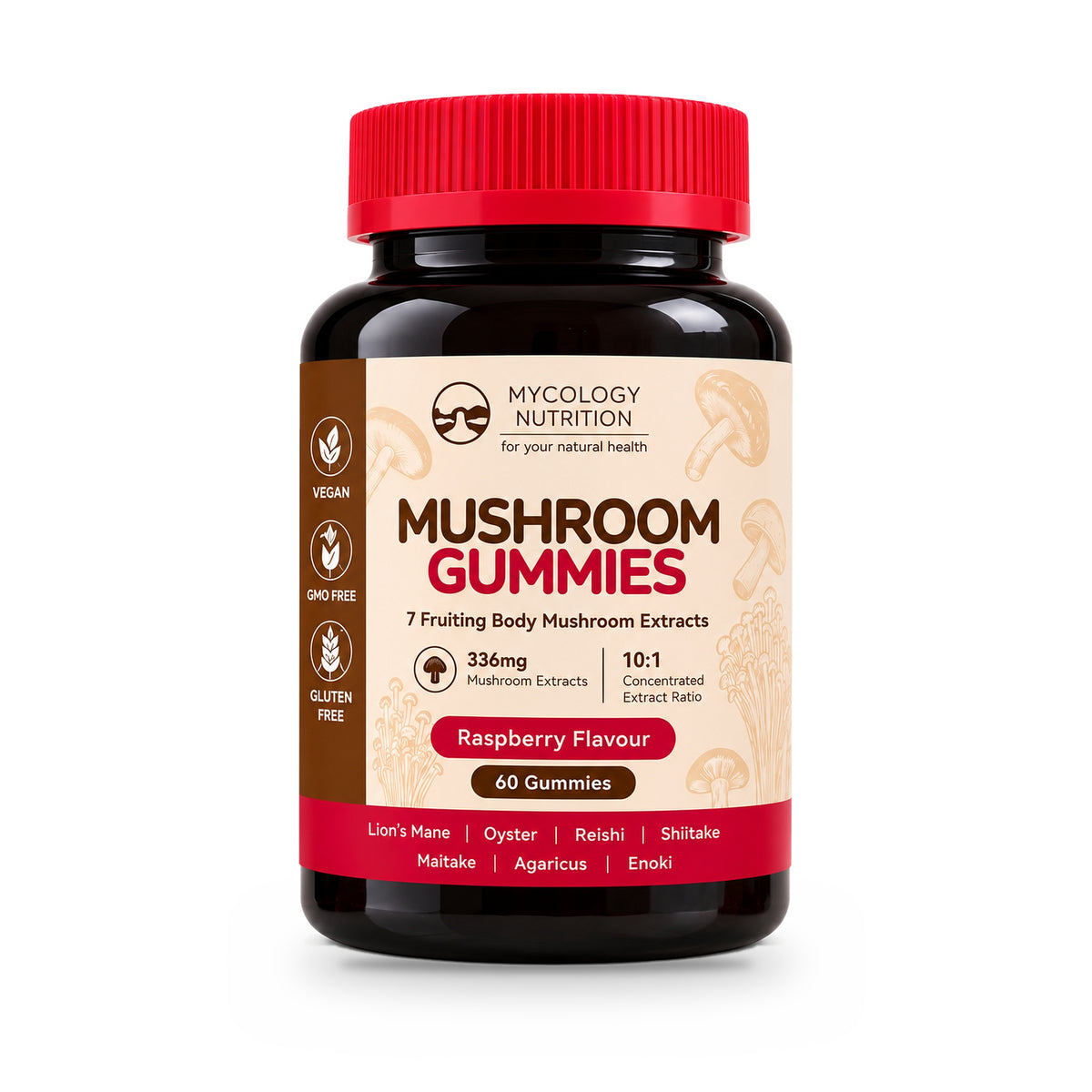
Seven organic mushrooms in a raspberry gummy, from our sister brand Mycology Nutrition. Lion's mane, reishi, shiitake, maitake, oyster, agaricus and enoki, 48mg of each per daily serving.
Two gummies a day, no water needed, and a pot of 60 lasts a month. Vegan-friendly and gluten-free. Explore the formula
Couldn't load pickup availability
Verified Loox reviews
★★★★★
"Great service Quick delivery from point of order Very helpful staff Would recommend using this company"
★★★★★
"I love that aura nutrition comes in brown glass bottles always fast delivery. Like having a Chinese Dr in your pocket. Thank you"
★★★★★
"Recommend the company and its products. Always available, great communication and fast delivery"
★★★★★
"Being able to get TCM supplements from a company that is both responsive and trustworthy is really reassuring."
★★★★★
"Tastes just amazing and lasts several brews. My favourite tea now!"
★★★★★
"The staff are kind, helpful & actually listen & care for their customers wellbeing."
Lion's mane looks nothing like a normal mushroom. It grows on hardwood trees as a shaggy white ball of dangling spines, and in China it's called hou tou gu, 'monkey head mushroom'. There's an old saying that pairs it with bird's nest as the delicacies of the mountains and the sea. Cooked, it's soft and a bit like crab, oddly enough.
Reishi (ling zhi) is the one with the oldest paper trail. It's in the Shen Nong Ben Cao Jing, China's earliest herbal, and it turns up all over Chinese art as a symbol of good fortune. Shiitake has been grown on logs in China and Japan for something like a thousand years. Maitake is Japanese for 'dancing mushroom', and enoki you'll know as those long, thin white strands in a hot pot.
The last two came from further afield. Oyster mushrooms were first deliberately grown in Germany during the First World War, when food was short. Agaricus subrufescens was picked up in the hills around Piedade, in Brazil, and taken to Japan in the 1960s, where it became a bit of a sensation.
How they're made
A mushroom is only the visible bit of the fungus. The fruiting body is the part you'd pick, slice and cook. Underneath, there's mycelium, a fine web of threads, and plenty of mushroom products are actually made from mycelium grown on grain, oats or rice. Nothing wrong with that, but it isn't quite the same thing.
We use extracts of the fruiting body for all seven. Each one is concentrated 10:1, so the 48mg of each mushroom in a day's serving comes from roughly ten times that weight of dried mushroom. Across all seven that's 336mg of extract, or about 3.36g of dried mushrooms.
Why gummies? Mostly because mushroom powders taste like a forest floor and capsules are easy to forget. A raspberry chew is a lot easier to stick with.
Mushrooms as food
These mushrooms have a long record as food, and some as traditional ingredients in East Asian cooking and herbalism. We're describing that history here, not making health claims.
Shiitake, oyster and enoki are everyday kitchen mushrooms from Tokyo to Taipei.
Lion's mane has long been a special-occasion dish in China, often braised.
Reishi is too woody to eat, so it's traditionally sliced and simmered.
Two gummies, once a day. That's about as simple as a routine gets.
This section describes the history of these mushrooms as foods and traditional ingredients. Mushroom Gummies are a food supplement and are not intended to diagnose, treat, cure or prevent any disease.
Inside the gummy · Ingredients
All seven are organic fruiting body extracts (10:1), in equal amounts. Amounts are per daily serving of 2 gummies.
The headliner
Lion's mane is the best-known name in the blend.
Kitchen mushrooms
Four you could buy at a good greengrocer or Asian supermarket.
Traditional mushrooms
Reishi from Chinese herbal tradition, agaricus from the hills of Brazil.
Inactive ingredients: Glucose syrup, Glucose, Fruit and vegetable juice concentrates, Water, Pectin, Olive oil, Citric acid, Natural raspberry flavouring, Sodium citrate.
These make up the gummy itself: the sweetness, the raspberry flavour and the chewy set.
How to take
Chew them whenever suits, with breakfast is easiest to remember. No water needed.
60 gummies at two a day. Do not exceed the recommended daily intake.
2.6g of sugar per serving of two. Store somewhere cool and dry.
Keep out of reach of children. If you are pregnant, breastfeeding, taking medication or have a medical condition, speak to your GP before use.
Raspberry. Genuinely, that's it. You don't get the earthy mushroom flavour you'd get from a powder, which is the whole point.
Mycology Nutrition is our sister brand, the mushroom specialists in the Aura family. Same team, same standards.
Yes. They're set with pectin rather than gelatine, and they're vegan-friendly and gluten-free too. And they're GMP certified.
2.6g per daily serving of two gummies, which works out at 19kcal. Each gummy weighs 3g.
Please don't. Two a day is the serving, and it's important not to go over the recommended daily intake. They're tasty, we know.
Lots of people take them alongside their other Aura supplements. If you're pregnant, breastfeeding, on any medication or have a medical condition, check with your GP or pharmacist before you start.
You might also like
Verified Loox reviews
Food supplements should not be used as a substitute for a varied, balanced diet and a healthy lifestyle. Not intended to diagnose, treat, cure or prevent any disease. Do not exceed the recommended daily intake. Keep out of reach of children.


